
Quick Answer: A washing machine coin acceptor not working is usually caused by a jammed coin path, a dirty or worn coin validator sensor, a loose wire connection, or a full coin box that trips the safety switch. Most laundromat owners can clear a simple jam in under 10 minutes, but sensor or wiring faults usually need a technician. Left unfixed, one dead coin slot can cost a laundromat RM50–RM150+ in lost revenue per week from that single machine.
If a customer is standing in front of your machine right now feeding coins that won’t register, you don’t have time for theory — you need the fix. A washing machine coin acceptor not working is one of the most common service calls in the self-service laundry business, and it’s rarely as serious as owners first assume. Below is the exact troubleshooting order a laundry equipment technician would run through, starting with what you can check yourself in the next few minutes.
Self-service laundries have been part of daily commercial life for nearly a century — the first laundromat opened in Fort Worth, Texas, in 1934 — and they remain a high-traffic, coin-dependent business model even today (Wikipedia). That long history is exactly why coin mechanism reliability still matters so much to owners.
Why Is My Washing Machine Coin Acceptor Not Working?
The most common cause is physical obstruction — a bent coin, foreign object, or debris stuck in the coin path — followed by a dirty or misaligned coin sensor. Both prevent the mechanism from correctly reading a coin’s size, weight, or metal composition, so it rejects or ignores it entirely.
Coin acceptors work by passing each coin through a narrow channel lined with sensors that check its diameter, thickness, and electromagnetic signature against a stored reference. Coin mechanism manufacturers design these channels with a protective “lip” specifically to block non-coin objects from reaching the sensor and to prevent tethered or fraudulent coin-like objects from tripping it repeatedly (Imonex Services patent, via Google Patents) — which is also exactly the kind of channel that lint and coin dust get lodged in over time. Even a small amount of debris or a slightly bent coin can throw off that reading enough for the machine to reject genuine currency. This is the single most frequent service call for self-service laundry equipment, and it’s also the fastest one to resolve without calling anyone out.
Common Causes of a Faulty Coin Acceptor (Ranked by How Often They Happen)
A washing machine coin acceptor not working can usually be traced back to one of seven recurring faults. Coin mechanism failures follow a predictable pattern, and working through them in this order saves the most time before you consider a professional service call.
| Cause | How Common | Can You Fix It Yourself? |
|---|---|---|
| Jammed or stuck coin in the path | Very common | Yes — usually a 5-10 minute fix |
| Dirty or dusty coin sensor | Very common | Yes — with basic cleaning |
| Bent, damaged, or foreign coin lodged inside | Common | Yes, with care |
| Loose or corroded wiring connection | Occasional | Sometimes — risk of electrical damage |
| Full coin box tripping the safety cutoff | Occasional | Yes — simple empty and reset |
| Worn-out or misaligned coin validator sensor | Occasional | No — needs recalibration or replacement |
| Failed control board or timer relay | Rare | No — needs a technician |
Coin-operated equipment associations generally note that mechanical jams and sensor contamination account for the large majority of “machine won’t take coins” service calls, while board- or relay-level failures are far less frequent but far more expensive to leave unresolved.
How Do I Fix a Jammed Coin Acceptor Myself?
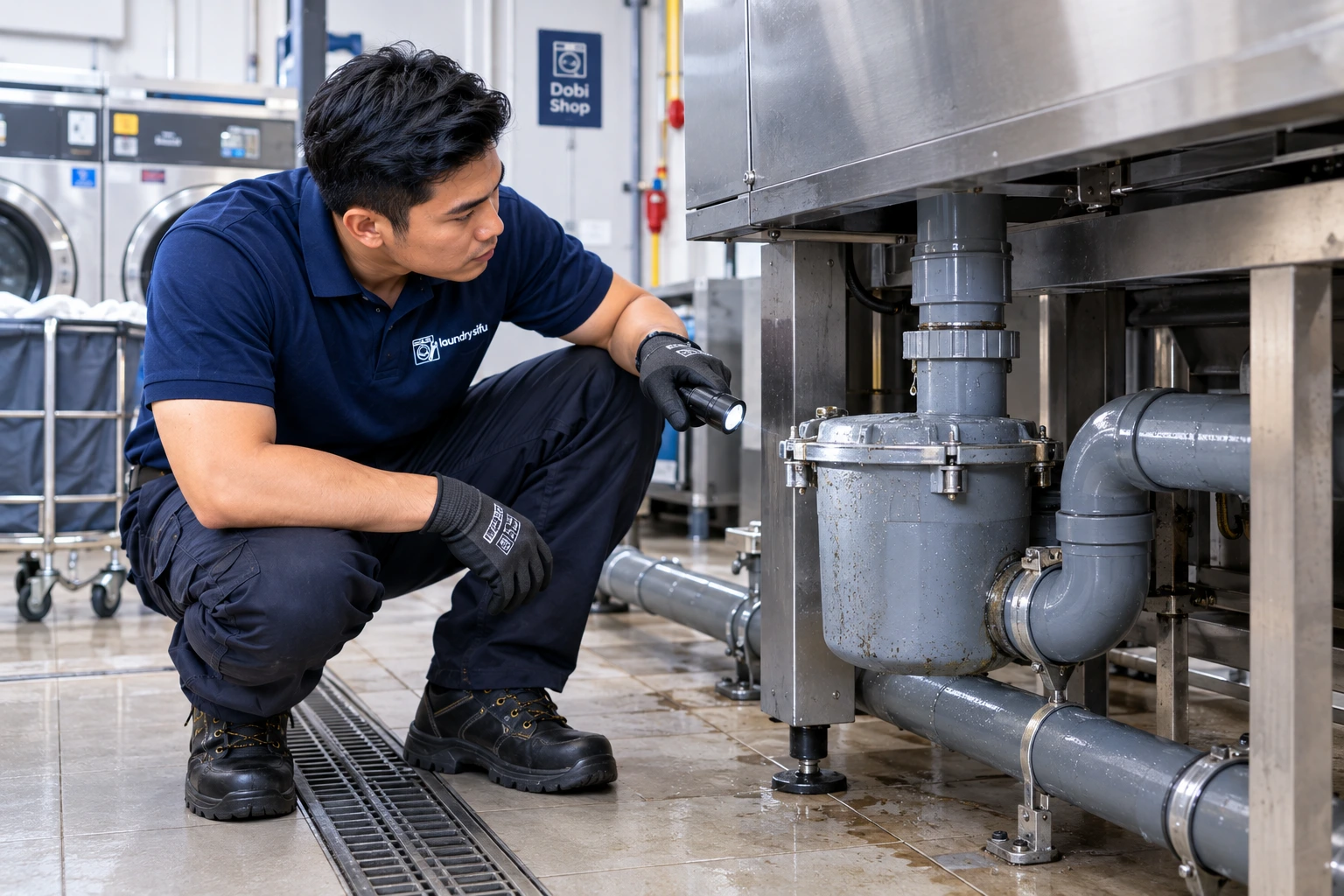
A washing machine coin acceptor not working because of a simple jam is the easiest version of this problem to fix on your own. Turn off the machine, open the coin mechanism housing (usually accessed from the front panel with a small key or Allen key), and gently remove any visible coin, debris, or lint blocking the channel using a flashlight and a soft tool — never a metal object that could scratch the sensor.
- Power down the machine at the wall or breaker to avoid any electrical risk while the housing is open.
- Unlock and open the coin mechanism using the maintenance key that came with the equipment.
- Inspect the coin path with a flashlight for a wedged coin, foreign object, or built-up lint and coin dust.
- Clear the obstruction gently with a soft brush or plastic tool — avoid metal picks near the sensor.
- Wipe the sensor eye and coin channel with a dry, lint-free cloth. Do not use liquid cleaners near the electronics.
- Close, lock, and power the machine back on, then test with two or three coins of different denominations if applicable.
If the coin still doesn’t register after a clean and clear, the fault has likely moved past a simple jam and into sensor calibration, wiring, or board territory — that’s where DIY attempts start to risk making the problem worse.
Why Does My Coin Acceptor Take Coins But the Machine Doesn’t Start?
This points to a wiring or control board issue rather than the coin mechanism itself — the acceptor is correctly validating and counting the coin, but the signal isn’t reaching the machine’s start relay. It’s a different fault from a coin being rejected outright, and it’s not something to keep testing repeatedly, since it risks the coin box overfilling with no wash cycles to show for it.
Check first whether the connector between the coin acceptor and the control board has worked loose, which is common on machines that see heavy daily use and vibration. If the connections look intact, the fault is likely inside the timer or control board, and continuing to feed coins in will only mean issuing manual refunds later. This is one of the clearest signs it’s time to bring in someone who can test the board directly rather than guessing.
Can a Full Coin Box Stop the Acceptor From Working?
Yes. Most commercial coin mechanisms have a safety switch that disables the acceptor once the coin box reaches capacity, specifically to prevent coins from jamming the mechanism or spilling internally.
If your machine was working fine and then suddenly stopped accepting coins with no other symptoms, an overdue coin collection is one of the first things to rule out — and one of the easiest to fix. Simply unlock the coin box, empty it, and reset the mechanism per the manufacturer’s instructions. Laundromats running high customer volume without a tight collection schedule run into this far more often than owners expect.
DIY Fix vs. Calling a Technician: Which Should You Choose?
Try a DIY fix when the fault is a simple jam, dust buildup, or a full coin box — these are low-risk and reversible. Call a technician when you’re dealing with wiring faults, a coin acceptor that intermittently fails across multiple machines, or any issue involving the control board, since incorrect handling here can turn a small repair into a full unit replacement.
| Situation | Recommended Approach |
|---|---|
| Single coin stuck, machine otherwise fine | DIY clean and clear |
| Coin box full or near capacity | DIY empty and reset |
| Coins accepted but machine won’t start | Technician — likely wiring/board |
| Multiple machines failing around the same time | Technician — possible power or systemic issue |
| Sensor rejects coins even after cleaning | Technician — recalibration or replacement |
| Any burning smell, sparking, or visible wire damage | Technician — stop use immediately |
Laundromats that treat coin mechanism cleaning as a scheduled task rather than a reactive fix consistently report fewer emergency call-outs, because most failures are progressive — a machine that occasionally misreads coins today is often the one that fails outright within weeks.
How Much Downtime Does a Broken Coin Acceptor Really Cost?
A washing machine coin acceptor not working for even a few days quietly drains revenue in a way most owners underestimate. A single out-of-service washing machine typically means lost revenue on every cycle that machine would have run during your business hours, plus the reputational cost of customers who walk out and don’t come back. For a machine running 15-20 cycles a day, even one day of downtime adds up fast, and a chronic intermittent fault that isn’t fully diagnosed can bleed revenue for weeks before an owner notices the pattern.
This isn’t a niche problem either — the coin laundry industry in the US alone is estimated at roughly 30,000 individual laundries, the large majority of which are small, independently owned businesses rather than large chains (FTC correspondence with the Coin Laundry Association). For an owner-operator running on thin margins, a handful of dead coin slots across the store is a meaningful hit to monthly revenue, not just an inconvenience.
This is the real argument for preventive maintenance over reactive repairs. A scheduled inspection catches a dirty sensor before it becomes a rejected-coin problem customers complain about on Google reviews. If you’re managing more than a handful of machines, a maintenance contract with a technician who knows your specific equipment usually costs less over a year than the combined lost cycles, refunds, and emergency call-out fees from letting each machine fail on its own timeline.
At Laundry Sifu, we’ve spent 10 years servicing and maintaining laundromat washing machines across Malaysia, and coin acceptor faults remain one of the top three service calls we get — most of them preventable with a routine check. If your machines are due for an inspection, our laundromat maintenance and repair services cover coin mechanism servicing, wiring diagnostics, and full preventive maintenance plans built for self-service laundry businesses.
FAQ: Washing Machine Coin Acceptor Problems
Why does my washing machine coin acceptor reject good coins? Usually because dust, lint, or coin residue on the sensor is throwing off the size or weight reading. A washing machine coin acceptor not working for this reason almost always responds to a simple clean of the coin path and sensor eye; if rejection continues, the sensor may need recalibration.
Can I clean a coin acceptor myself without damaging it? Yes, if you use a dry, lint-free cloth and a soft plastic tool — never metal objects, liquid cleaners, or compressed air directly into the sensor housing, which can push debris deeper in.
How often should a laundromat coin mechanism be serviced? Most commercial laundry equipment benefits from a coin mechanism inspection every 1-3 months, or more frequently for high-traffic locations, as part of a broader preventive maintenance routine.
Why did my coin acceptor suddenly stop working overnight? The most common overnight causes are a coin box that reached capacity, a coin lodged during the last transaction of the day, or a power interruption that reset the machine’s board. Check the coin box level first.
Is it worth repairing an old coin acceptor or replacing it? If the unit is failing repeatedly despite cleaning and minor repairs, or parts for that model are becoming hard to source, replacement is usually more cost-effective than repeated call-outs — a technician can assess this on-site.
Do card or app payment systems eliminate coin acceptor problems entirely? They remove coin-specific faults but introduce their own maintenance needs around card readers and network connectivity, so most laundromats running hybrid payment systems still need both mechanisms serviced.
Next Step
If you’ve cleared the obvious jams and your washing machine coin acceptor is still not working, don’t let it sit — every day it’s down is lost cycles. Get in touch with Laundry Sifu for a coin mechanism inspection or a full preventive maintenance plan, backed by 10 years of hands-on laundromat equipment servicing.