Quick Answer: A commercial water softener removes calcium and magnesium from your incoming water through ion exchange, so scale stops forming inside washers, boilers and pipes. Water above 120 mg/L hardness is classed as hard by the US Geological Survey. For a laundromat, softer water means cleaner laundry, lower detergent use and fewer breakdowns.
Choosing a commercial water softener is one of the quietest decisions that affects your laundromat’s profit. Hard water rarely causes one dramatic failure; it builds scale, stiff towels and extra service calls month after month. This guide covers how a commercial water softener works, what it protects and how to maintain one in Malaysia.
What Is a Commercial Water Softener and How Does It Work?
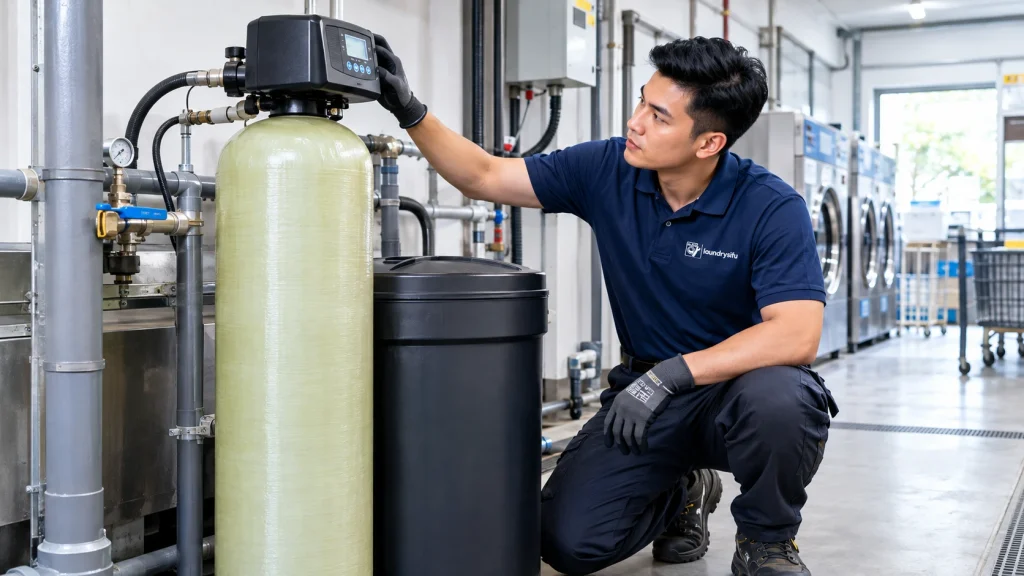
A commercial water softener is a treatment unit that swaps the hardness minerals in your water for sodium or potassium. It is not a filter, so it will not remove dirt, chlorine or odour. Its one job is to stop calcium and magnesium turning into scale on your machines.
How does the ion exchange process work?
Every commercial water softener uses the same four-stage cycle.
- Hard water enters the resin tank, which is packed with tiny plastic beads.
- The beads hold sodium or potassium ions. Calcium and magnesium cling to the beads and release those ions into the water.
- Soft water leaves the tank and flows to your washers, water heater or boiler.
- When the beads are full, the control valve starts regeneration. Salty brine from the brine tank flushes the trapped minerals to drain and recharges the beads.
Regeneration uses water and salt. On a single-tank unit, soft water pauses while the cycle runs, which matters for a shop that trades all day.
How hard is hard water?
Hardness is measured in mg/L of calcium carbonate. The US Geological Survey hardness scale splits water into four bands.
| Hardness band | Hardness (mg/L) | Typical effect in a laundromat |
|---|---|---|
| Soft | 0 to 60 | Little scale; normal detergent doses |
| Moderately hard | 61 to 120 | Slow scale build-up on heated parts |
| Hard | 121 to 180 | Visible scale and higher detergent use |
| Very hard | Over 180 | Fast scale; a softener is strongly advised |
Some suppliers quote grains per gallon instead. One grain per gallon is roughly 17.1 mg/L.
What Are the Hidden Costs of Hard Water in a Laundromat?
Hard water drains money in five places, and most owners only notice the last one. These are the costs a commercial water softener is meant to prevent, so test your own water before assuming they apply to you.
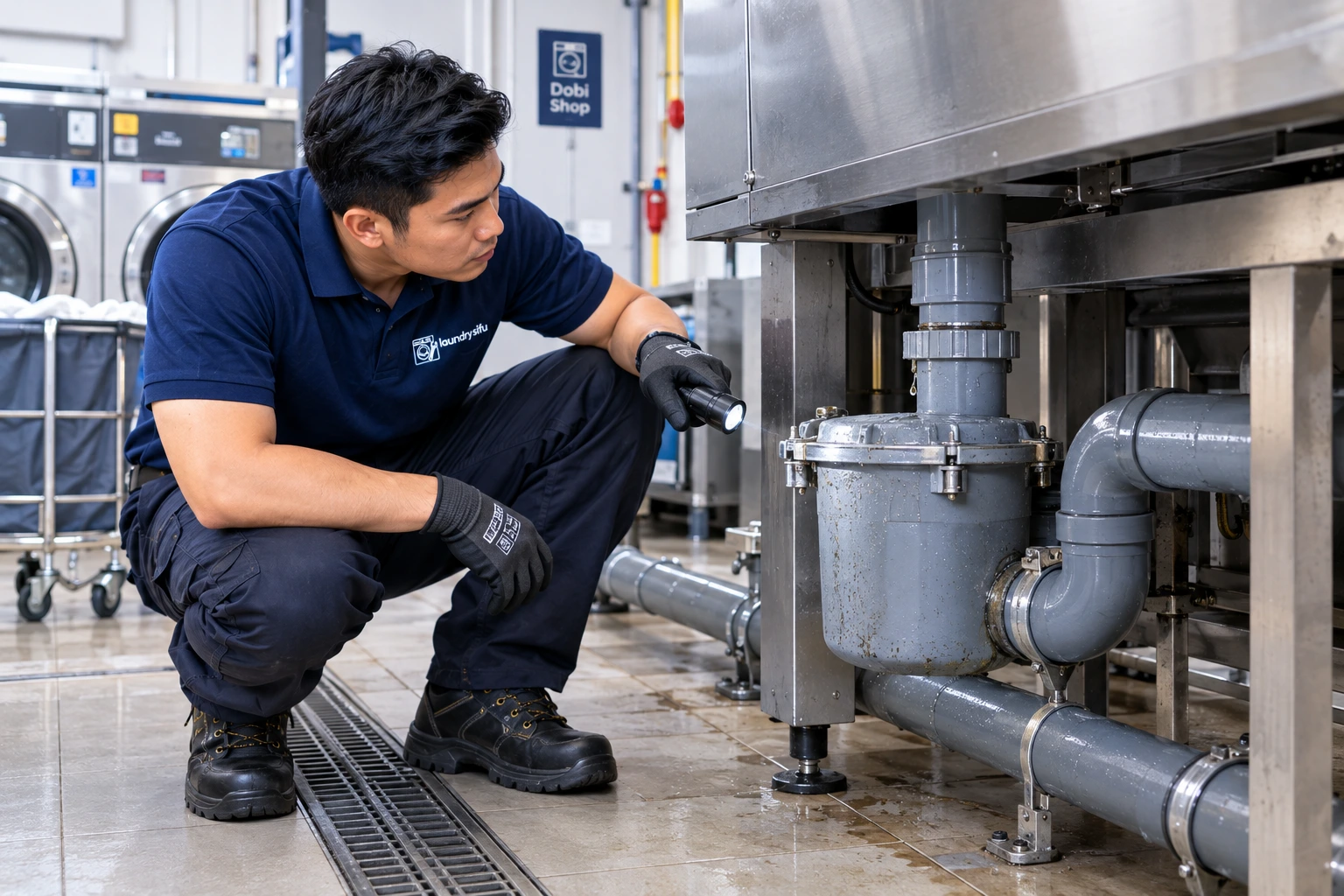
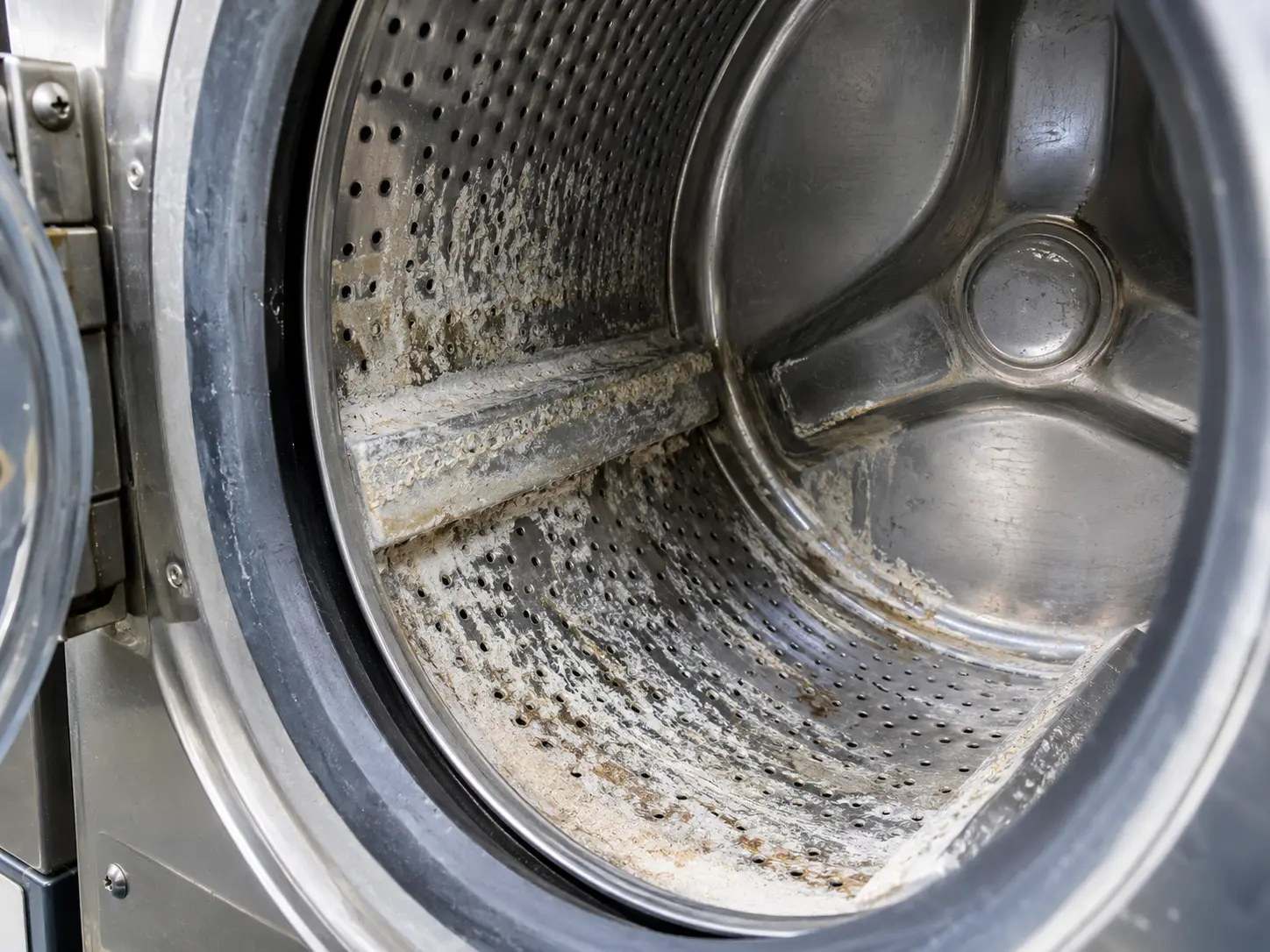
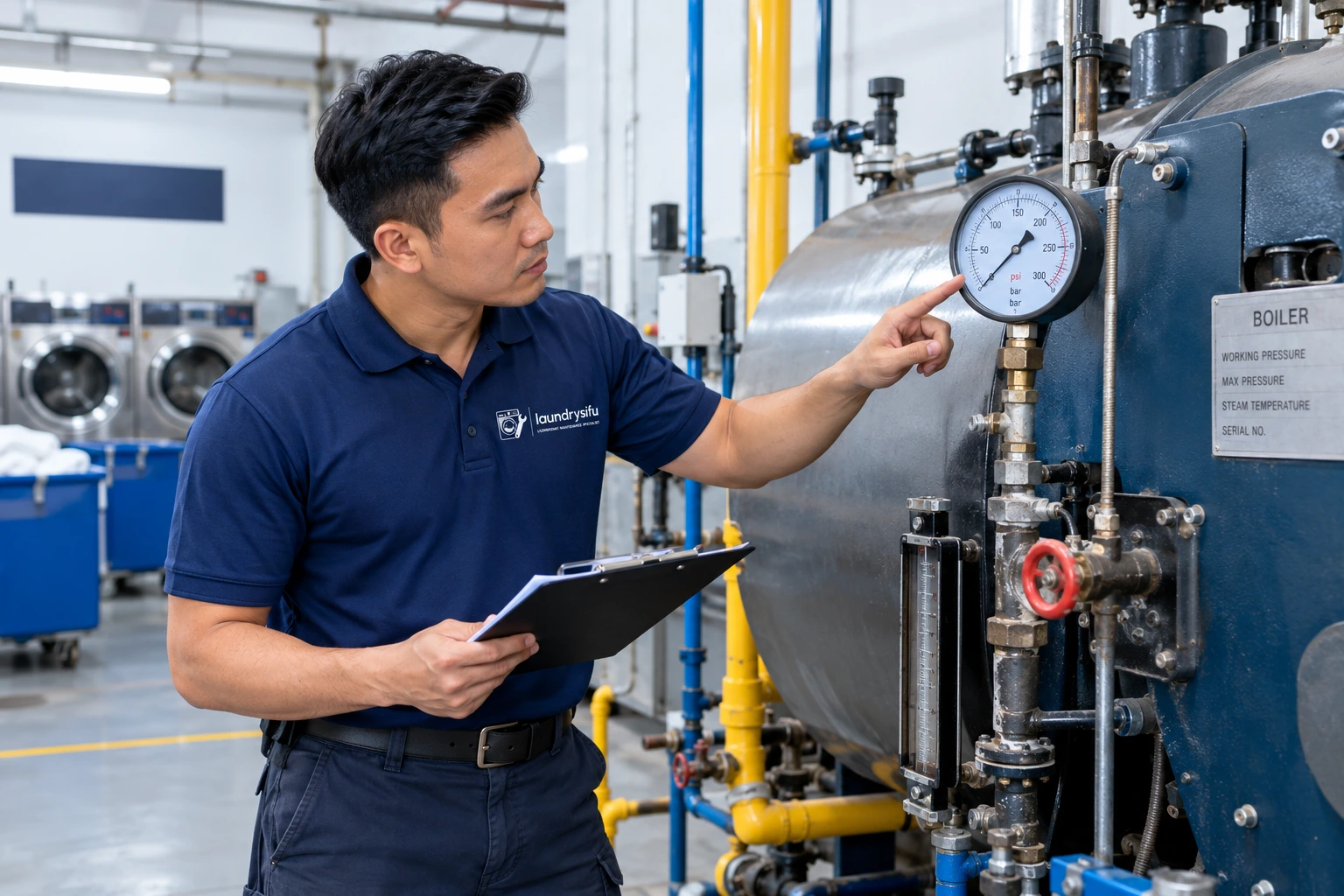
- Scale on heating parts. Limescale insulates heating elements and boiler surfaces, so machines use more energy to reach temperature and parts fail sooner.
- Blocked inlet valves and screens. Mineral flakes can clog the water inlet, which shows up as slow filling or fault codes.
- Extra detergent. Hardness binds with detergent, so you may need more product for the same wash quality.
- Stiff, dull laundry. Mineral residue leaves towels rough and whites grey, which hurts you most if you serve hotels or clinics.
- Machine downtime. Every day a machine sits idle is lost revenue, and spare-part lead times can stretch repairs.
Our Learning Centre has videos on common commercial laundry machine problems.
What Do Laundromats Gain From Softened Water?
Softened water protects your machines, improves wash results and gives you more control over detergent spending. The gains map directly to the hidden costs above.
- Longer machine life: Heating parts, valves and pumps stay free of scale, so they work as designed.
- Better wash results: Detergent lathers and rinses more easily, and towels come out softer and brighter.
- Lower running costs: Cleaner heating surfaces use less energy, and you can review detergent doses with your supplier.
- Fewer complaints: Consistent results keep walk-in customers and commercial accounts coming back.
- Comfort for staff: Softer water leaves less mineral residue on skin and linen.
There is a small trade-off. Softened water adds salt and routine checks to your workload, so budget for both.
Do You Need a Commercial Water Softener in Malaysia?
It depends on your water source, not just your location. Treated mains water in many urban areas is often soft to moderate, while borehole water and supply from limestone areas can be much harder.
Whether a commercial water softener pays for itself depends on your test result and how hard your machines work.
In Peninsular Malaysia, the National Water Services Commission (SPAN) regulates water services, and treated water should meet the Ministry of Health’s drinking water standard. You can also ask your supplier, such as Air Selangor, for recent water quality data for your area.
How can you test your water hardness?
- Use a hardness test kit or strips at the washer inlet, not the street tap.
- Repeat the test in the dry season and the rainy season, because raw water quality can change.
- If you use borehole water, ask a water treatment specialist for a lab test that also checks iron.
- Compare your result with the hardness table above.
What Won’t a Commercial Water Softener Fix?
A softener treats hardness only. It will not fix muddy water after heavy rain, low pressure or a supply cut. A sediment filter or a storage tank may be needed alongside it.
Which Type of Commercial Water Softener Suits Your Shop?
Most small laundromats do well with a metered single-tank commercial water softener. Shops that cannot afford any gap in soft water should look at a duplex unit.
| Type | How it works | Best for | Watch out for |
|---|---|---|---|
| Single tank, timer | Regenerates on a fixed schedule | Steady, predictable water use | Can waste salt or run short on busy days |
| Single tank, metered | Counts litres used and regenerates when capacity runs low | Most small to medium shops | Soft water pauses during regeneration; set it for night |
| Twin or duplex | Two tanks take turns, so supply never stops | Long opening hours, large or hotel-style laundries | Higher upfront cost and more space |
| Non-electric | Water flow drives the valve, so no plug is needed | Sites with unreliable power | Fewer settings; check parts availability |
| Salt-free conditioner | Changes how scale forms; does not remove minerals | Light scale protection only | Not a true softener; detergent still faces hardness |
Salt-based units usually run on sodium chloride. Potassium chloride is an alternative, though it generally costs more.
How Do You Size a Commercial Water Softener for Your Laundromat?
Size your commercial water softener to your peak flow rate in litres per minute and your daily hardness load, which is litres used multiplied by hardness. Your supplier will need both numbers.
Here is an illustration. A shop using 6,000 litres a day at 150 mg/L carries 900,000 mg, or 900 g, of hardness daily. That is about 13,900 grains, since one grain is 64.8 mg.
Ask the supplier how many grains the resin tank can remove between regenerations, then pick a size that regenerates overnight rather than at peak hours.
Gather these details before you ask for advice:
- Number of washers and their capacity in kg
- Water use per cycle, from each machine’s manual
- Your opening hours and busiest periods
- Your hardness test result
- Inlet pipe size, water pressure, drain access and floor space
Do Electrolux, Speed Queen and Huebsch Machines Need Soft Water?
Each manufacturer publishes water quality guidance in its installation manual, so check your model before choosing a softener. Machines with electric heating elements or hot-fill connections to a boiler tend to feel scale first.
Laundry Sifu provides Electrolux laundry machine service, Speed Queen laundry machine service and Huebsch laundry machine service, and we check inlet valves, heating parts and drain pumps for scale.
How Do You Maintain a Commercial Water Softener?
Check the salt weekly, test the softened water monthly and book a professional service at least once a year. A little routine care keeps your commercial water softener delivering soft water.
What does a simple maintenance routine look like?
- Weekly: Keep the salt above the water line in the brine tank. Look for a hard crust, called a salt bridge, which stops brine forming.
- Monthly: Test the softened water at the outlet. A rising reading points to a regeneration or resin problem.
- Quarterly: Check the time and regeneration settings, the drain line and the area around the brine tank.
- Yearly: Have a technician clean the brine tank, inspect the resin, injector and valve seals, and check any pre-filter.
Malaysia’s humidity makes salt absorb moisture and clump, so store sacks off the floor in a sealed container. Use the salt grade named in your softener’s manual.
Chlorine in treated tap water slowly wears down resin, so falling capacity can signal an ageing tank. A carbon pre-filter can slow that wear.
On many models, a TNB power interruption can reset the clock, so regeneration may then start during your busiest hours. Check the clock after any outage.
See the different in our official video: commercial water softener video from Laundry Sifu.
When Should You Call a Technician for a Commercial Water Softener?
- Stiff laundry or visible scale returns after a period of soft results
- The salt level never drops, which can mean a bridge or a failed regeneration
- Water runs to drain constantly or the brine tank overflows
- Hardness at the outlet keeps climbing between services
Laundry Sifu maintains the machines and water systems your laundry depends on, but we do not sell softeners, so our advice stays independent.
Commercial Water Softener FAQs
Is a commercial water softener worth it for a laundromat?
Usually yes, if your water tests hard or very hard and you run several machines daily. It cuts scale, detergent use and breakdown risk. If your water tests soft, put the money into regular servicing instead.
Can I use a household water softener in a laundromat?
It is not advisable. Household units are sized for far lower flow and daily demand, so the resin can run out mid-day and let hard water through. Choose a commercial water softener rated for your peak flow.
Does a commercial water softener remove chlorine or dirt?
No. It removes hardness minerals only. For chlorine, sediment or iron you need a carbon filter, sediment filter or iron treatment placed before the softener.
How often does a commercial water softener need salt?
It depends on water use and hardness, so there is no fixed schedule. Check the brine tank weekly and top up before the salt drops near the water line. Heavy-use shops may refill more often.
Will softened water harm my washers?
No. Softened water protects heating parts and valves from scale. Follow your manufacturer’s water guidance and ask your technician if you are unsure.
What Should You Do Next?
Start with three simple steps: test your water hardness, photograph any scale on inlet screens or door seals, and list recurring faults such as slow filling, heating errors or stiff laundry.
Then send your findings to Laundry Sifu through our commercial laundry services page, using the contact or WhatsApp inquiry option. Whether you already run a commercial water softener or are still deciding, we will check how your water is affecting your machines. Customers on a maintenance contract also receive our free 10-point health check.