Quick Answer: A commercial washer not draining is usually caused by one of three problems: a kinked or blocked drain hose, a clogged pump filter, or excess suds. Check these first, with the machine isolated from power. If the pump hums but does not move water, or stays silent, a technician should test the pump and control board.
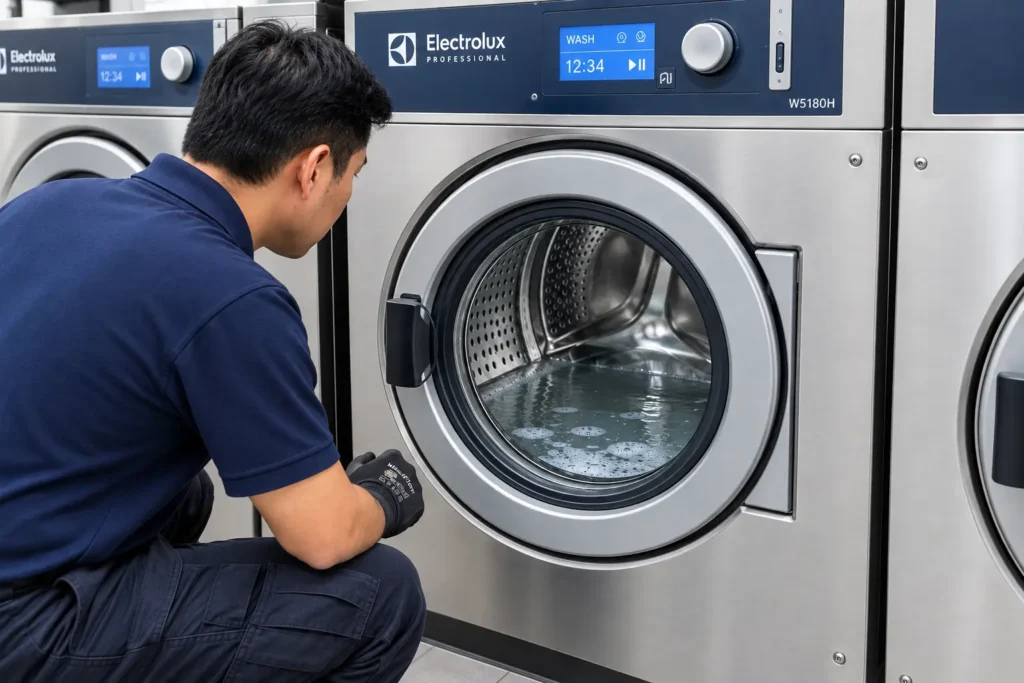
A commercial washer not draining can freeze a kedai dobi in the middle of a busy day. Water stays in the drum, the door stays locked and customers wait with wet laundry. This Laundry Sifu guide shows how to find the cause in order, what is safe to check yourself, and when to call a technician.
Why Is Your Commercial Washer Not Draining?
A commercial washer not draining almost always comes down to a blockage, too many suds or a failed drain component. Start with the cheap checks outside the machine, then work inwards. Leave the electrics until last.
That is the order we recommend at Laundry Sifu: hose, filter, suds, floor drain, then pump or drain valve, then electrics. It saves time and stops you paying for parts that were never faulty.
| Cause | What you will notice | Who should fix it |
|---|---|---|
| 1. Kinked or blocked drain hose | Slow draining, water left in the drum after the cycle | Trained staff, with power off |
| 2. Clogged pump filter or trap | Water stays in, lint or coins found in the trap | Trained staff, with power off |
| 3. Oversudsing | Foam at the door or detergent drawer, drain stalls | Owner, by correcting detergent type and dose |
| 4. Blocked floor drain or building pipework | Water backs up at the floor drain, other machines drain slowly too | Plumber or building management |
| 5. Object jammed in the pump or drain valve | Humming, grinding or rattling at the drain stage | Technician |
| 6. Failed pump motor or drain valve | No sound and no flow, or a valve that does not open | Technician |
| 7. Sensor, door-lock or control board fault | Error code, drain stage never starts | Technician |
Is It Safe to Check a Commercial Washer Not Draining Yourself?
Yes, for external checks, as long as power and water are isolated first. Never open a panel while the machine is live.
Malaysia’s Occupational Safety and Health Act 1994 (Act 514) places general duties on employers to keep the workplace safe, and the Department of Occupational Safety and Health (DOSH) administers it. In practice, any staff member who clears a hose or filter should be shown how to isolate the machine first.
- Stop the programme and switch the machine off at the isolator or breaker.
- Close the water inlet valves.
- Let hot water cool, because a hot-wash programme can leave scalding water in the drum.
- Place a tray, towels or a bucket under any hose or filter you plan to open.
- Do not force a locked door. The lock usually stays engaged while water remains in the drum.
What Outside Checks Fix a Commercial Washer Not Draining?
Three outside checks solve many cases: the drain hose, the amount of suds and the building drain. They need no tools and take about ten minutes.
Is the drain hose kinked, blocked or too high?
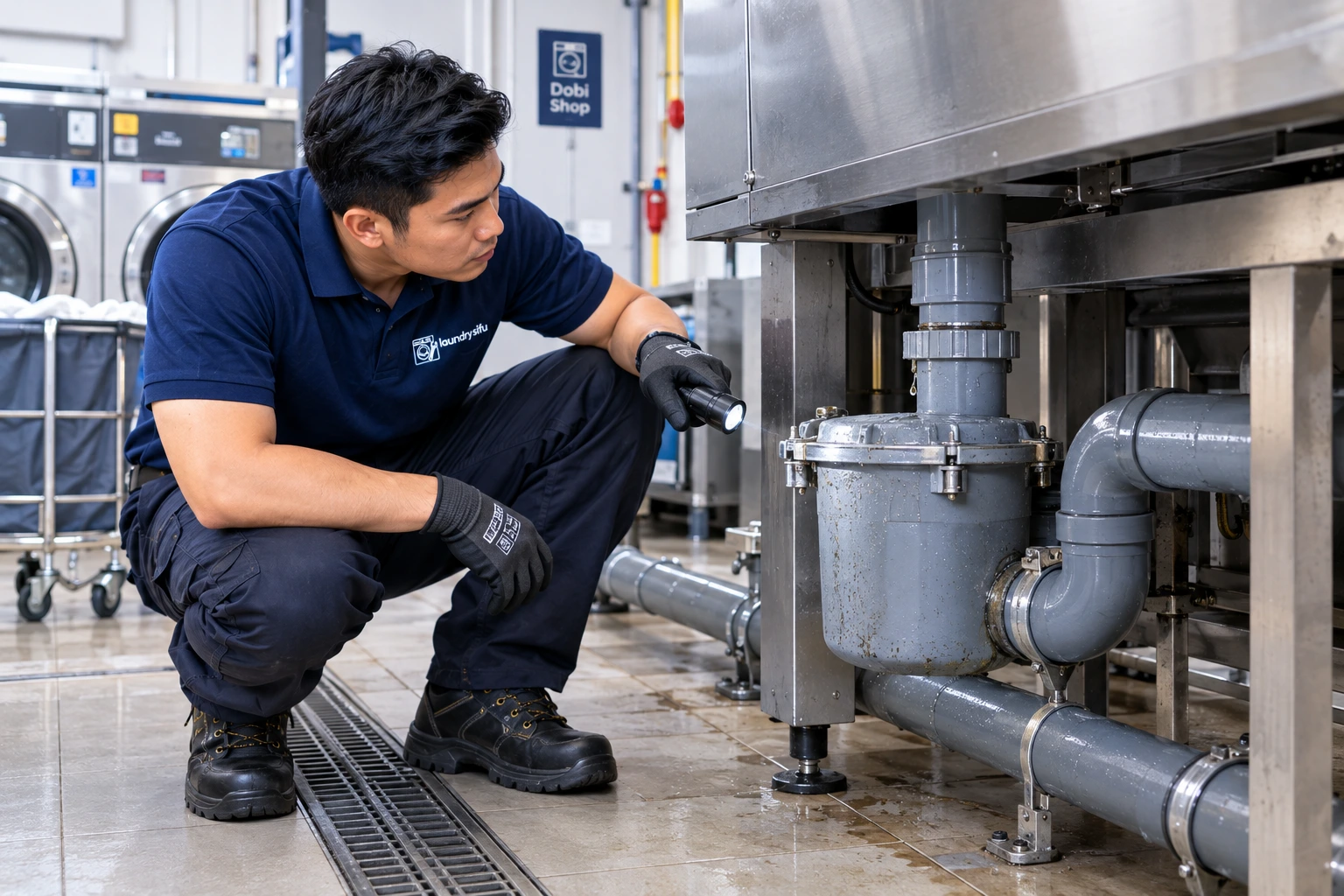
Pull the machine out slightly and look at the hose behind it. A kinked hose is the cheapest cause of a commercial washer not draining, and it often appears after a machine is moved for cleaning or pushed back against the wall.
Every model has a maximum discharge height in its installation manual. The figure differs between brands and models, so use your manual and not a number from an overseas guide. Hoses can also soften or crack with age in tropical heat and humidity.
Is oversudsing stopping the water from leaving?
Too much foam can choke the drain path and make a commercial washer not draining look like a pump fault. Use a low-suds detergent made for commercial front-load washer-extractors, and dose it by your supplier’s chart.
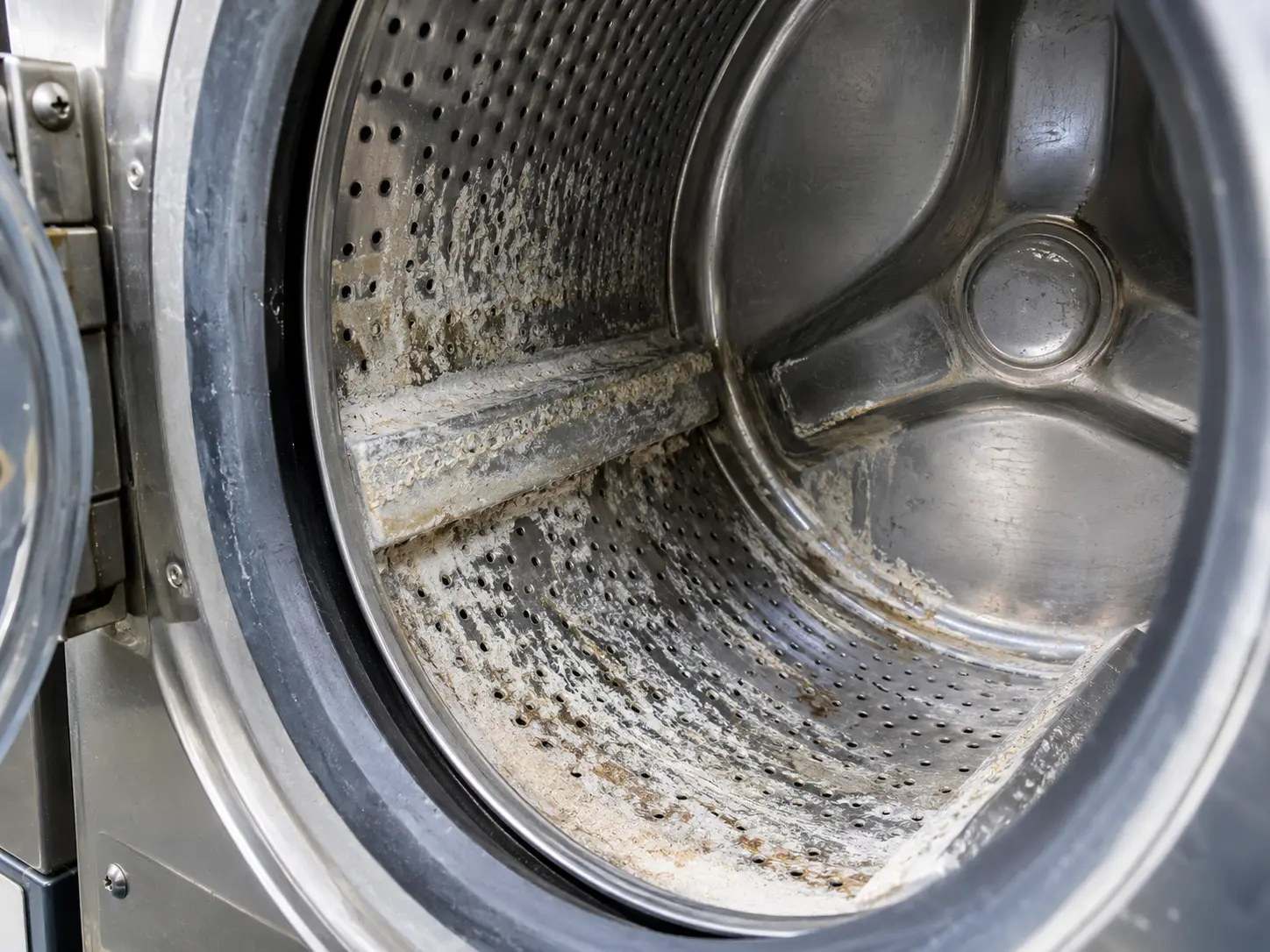
At self-service shops, customers who add their own detergent or softener on top of the automatic dosing are a common source of foam. A clear sign, such as “Do not add your own detergent”, helps. If you suspect suds, run a rinse-only cycle after the water has drained.
Is the building drain the real problem?
Sometimes the machine is fine and the drain it empties into is not. Run a different machine, or pour a bucket of water into the floor drain, and see how fast it clears.
Lint builds up in floor drains and gully traps, and damp lint packs harder in humid weather. During heavy rain, drains in low-lying areas of the Klang Valley, Johor Bahru and Penang can also run slowly. If the floor drain backs up, call a plumber or your building management before touching the machine.
How Do You Clear the Pump Filter or Drain Valve?
If your machine has a pump filter, clearing it is the most useful fix for a commercial washer not draining. Larger machines may have a drain valve instead, which needs a technician.
How do you clean a pump filter step by step?
See the fix in action in our official video: commercial washer not draining fix, step by step.
- Isolate power and water as described above.
- Find the filter access door, usually at the bottom front. Check your manual for the exact position.
- Put a shallow tray and towels in place, because trapped water will run out.
- Turn the filter cap slowly so the water drains in a controlled way, then remove it.
- Clear lint, coins, hairpins, buttons and tissue, and check the filter threads for damage.
- Refit the cap firmly, restore water and power, and run a short drain test.
Why do some larger machines have no pump filter?
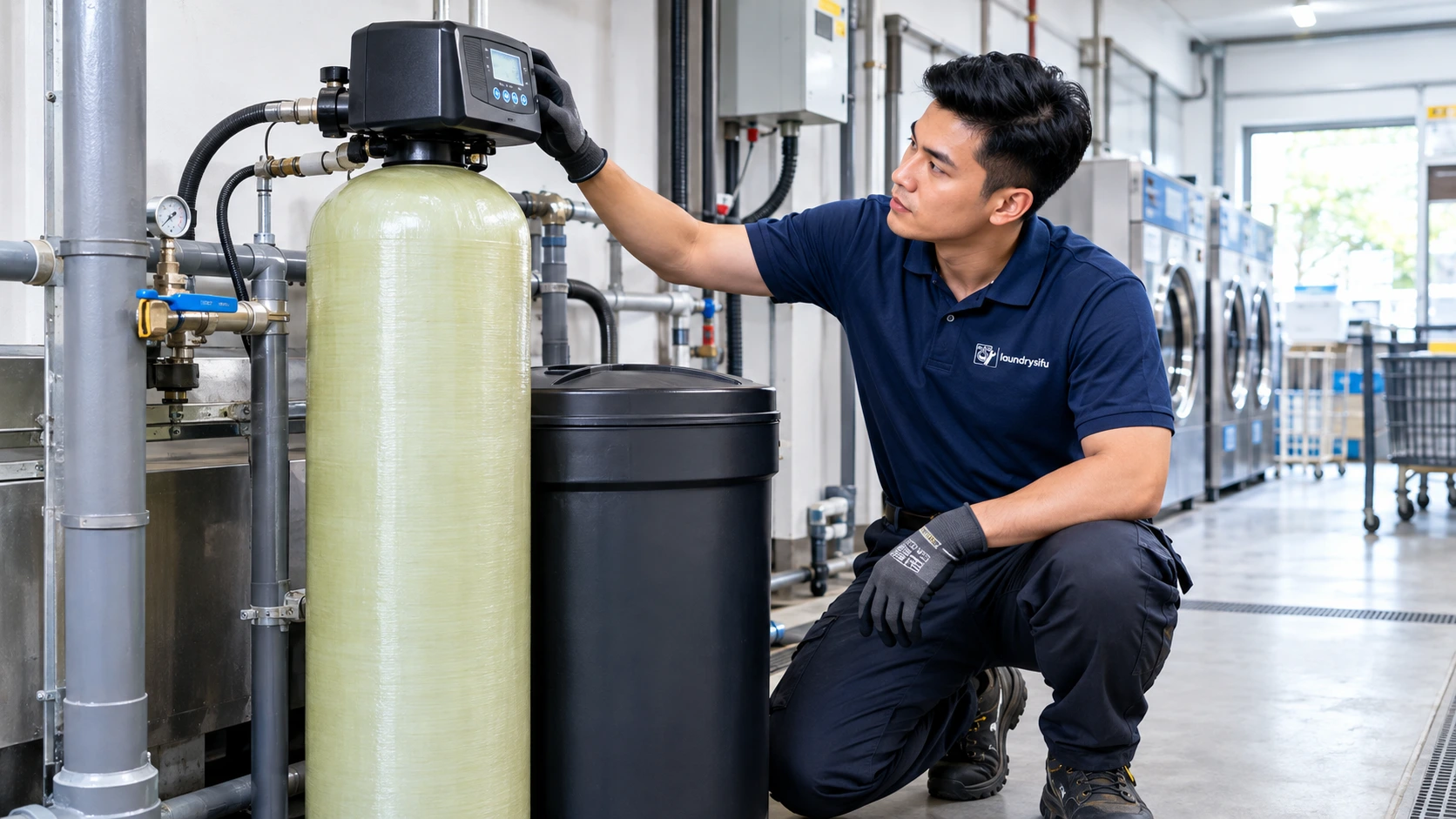
Many larger washer-extractors empty by gravity through a motorised or solenoid-operated drain valve, not a pump. Check your manual to see which design you own.
On these machines, a commercial washer not draining may mean a valve that is stuck, blocked with lint or not receiving its signal. Valve and wiring work should be left to a technician.
When Is a Commercial Washer Not Draining an Electrical Fault?
Suspect an electrical fault in a commercial washer not draining when the pump or valve stays silent at the drain stage, and the hose, filter and floor drain are all clear. At that point, stop and call a technician.
Many overseas guides tell you to check for 120 volts at the pump. That figure does not apply here. According to Tenaga Nasional Berhad (TNB), low-voltage supply in Peninsular Malaysia is 400/230V at 50Hz, and the voltage at a pump depends on the machine design.
Only a qualified technician should measure live terminals. The likely culprits are the pump motor, the wiring, the door-lock interlock, the water-level sensor or the control board.
If the pump hums but does not turn, something is probably jammed in the impeller, or the motor has failed. Both need the machine opened by a professional.
What Should Electrolux, Speed Queen and Huebsch Owners Check?
On every brand, the order for a commercial washer not draining is the same, but the details differ. Always read the manual for your exact model, including the error code list.
| Brand | Typical machines in Malaysian shops | Best first check |
|---|---|---|
| Electrolux | Washer-extractors such as the WN6-14, WN6-28, WS6-14 and WS6-28 | Display error code, then hose, then drain valve |
| Speed Queen | Front-load washers from about 14-16kg up to 28-32kg | Hose and standpipe, then drain valve |
| Huebsch | Front-load washers from about 14-16kg up to 28-32kg | Hose and floor drain, then drain valve |
Speed Queen and Huebsch are both Alliance Laundry Systems brands, so owners often see similar installation and drain layouts. Even so, do not assume two models behave alike. Download the user manual for your model from the manufacturer, for example from Electrolux Professional, before opening any panel.
How Much Downtime Does a Commercial Washer Not Draining Cost?
Every day a washer is out of action is lost revenue, and the repair bill is only part of it. Add staff time spent bailing water, refund requests and customers who go elsewhere.
Here is a simple example, for illustration only. A 16kg washer that runs 8 cycles a day at RM18 a cycle earns RM144 a day. A three-day wait for a part means RM432 in lost sales before the repair cost.
Replace those numbers with your own. Ask your technician about spare-part lead times before you approve a repair, because filters and hoses are usually easier to source locally than pumps or control boards for some models.
How Can You Stop a Commercial Washer Not Draining Again?
Most drain faults build up slowly, so a routine catches them early. A short weekly check costs far less than an emergency call during the weekend rush.
- Check and clean the pump filter on a schedule, because a clogged trap is a leading cause of a commercial washer not draining. Weekly is a sensible starting point for busy shops, then adjust to your lint load.
- Display “Empty all pockets” signs, because coins, hairpins and tissue cause many jams.
- Dose detergent by your supplier’s chart and check the dosing pump output regularly.
- Clean floor drains and gully traps, especially before the rainy season.
- Inspect every drain hose monthly for kinks, cracks and soft spots.
- Book scheduled preventive maintenance so a technician checks pumps, valves and wiring before they fail.
Customers on a Laundry Sifu maintenance contract receive a free 10-point health check. You can also watch new videos on common machine faults in our Learning Centre.
Commercial Washer Not Draining: Your Questions Answered
Why is my commercial washer not draining when the pump runs?
A commercial washer not draining with a running pump usually means the pump is turning but moving no water because the hose, the pump or the floor drain is blocked. A pump that runs yet moves nothing can also have a worn impeller. Isolate the machine and check the hose and filter first, then call a technician.
Can too much detergent stop a commercial washer from draining?
Yes. Heavy foam can choke the drain path and trigger a drain error. Switch to a low-suds detergent made for commercial front-load machines and follow your supplier’s dosing chart.
How do you empty a commercial washer that is stuck full of water?
Isolate power and water, let the water cool, and then drain it in a controlled way through the filter access or the manual drain method in your manual. Use a tray and bucket, and never force the door. If your model has no filter, call a technician.
How much does it cost to repair a commercial washer not draining?
It depends on the cause. Clearing a filter or hose is quick, while a pump, drain valve or control board costs more in parts and labour. Ask for an itemised quote after diagnosis so you can compare repair against downtime.
How often should you clean the pump filter?
Follow your manual first. For busy shops, a weekly check is a sensible starting point, and you can lengthen or shorten the gap depending on how much lint and debris you find.
What Is the Next Step if the Problem Continues?
If you have worked through the checks and your commercial washer is still not draining, stop running it and keep the door closed. Repeated attempts can damage the pump or drain valve.
Laundry Sifu has serviced commercial laundry machines since 2014 and covers the Klang Valley and Selangor. Visit our commercial laundry services page and send a WhatsApp or contact enquiry. Tell us the brand, the model and what the machine does at the drain stage.
Written by Sifu Tang, Technical & Sales Manager at Laundry Sifu, with more than 10 years in the laundromat industry. Last updated: 06/10/2026.