Quick Answer: A commercial washer leaking is usually caused by a worn door gasket, cracked hose, failing drain pump, or stuck inlet valve. Timing and location narrow it down: a leak while filling points to the door seal, a leak while draining with slow water points to a blocked drain, and rear leaks point to hoses or valves.
When you find a commercial washer leaking, stop the machine, close the water supply and put an out-of-order sign on it before you do anything else. Then work out where and when the water appears. The location and the timing tell you whether this is a five-minute owner check or a job for a technician.
By Sifu Tang, Technical & Sales Manager at Laundry Sifu, with 10+ years in the laundromat industry.
Where is my commercial washer leaking from?
The leak location is the fastest clue to the cause. Dry the floor, run a short cycle, and watch which part of the machine gets wet first.
| Where the water appears | Most likely cause | What you can check | Usually needs a technician? |
|---|---|---|---|
| Front, around the door | Worn or dirty door gasket, trapped debris | Gasket folds, door closing fully | If the gasket is torn |
| Rear of the machine | Inlet hose or hose clamp, inlet valve | Visible hose connections, tap | If the valve is the source |
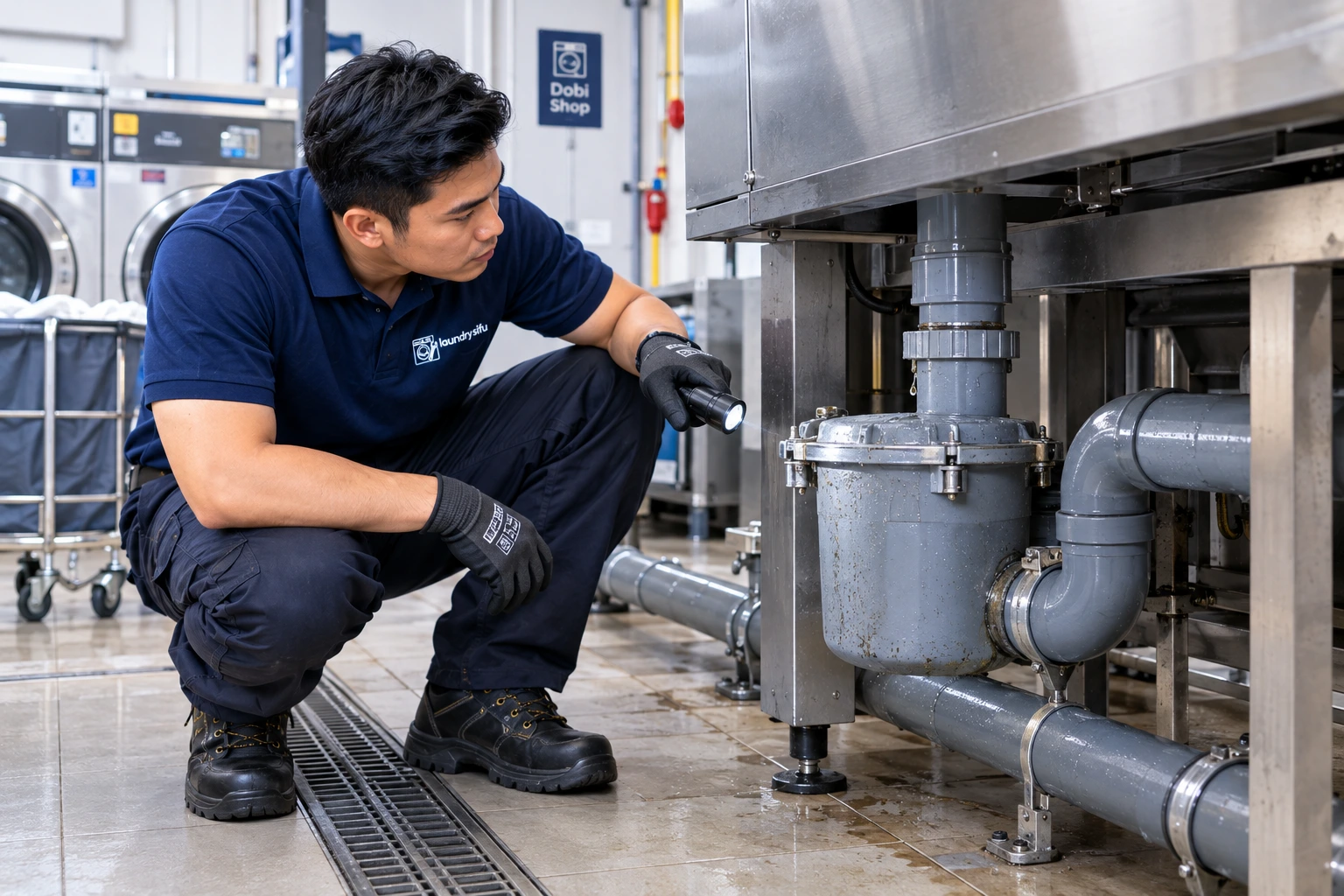
| Underneath | Drain pump, internal hose, tub seal | Drain hose position at the standpipe | Yes |
| Top or detergent area | Oversudsing, blocked dispenser | Detergent dose and type | Rarely |
| Floor drain area, not the machine | Blocked standpipe or drain backing up | Standpipe flow | Sometimes (plumber) |
A commercial washer leaking at the rear or underneath is easy to miss. Commercial machines are heavier, run far more cycles than home washers, and sit in a row with only the front panel visible, so the floor is often wet before anyone notices.
What does the timing of a commercial washer leaking tell you?
The timing of a commercial washer leaking points to the cause. A leak while the machine fills means the door seal. A leak while draining, with water slow to go down, means a blocked drain.
Sifu Tang walks through this in a short video, so you can see how the timing of a commercial washer leaking points to the cause before you call anyone out.
| When the leak happens | What it usually means |
|---|---|
| While the machine fills | Door seal or gasket problem, or an inlet hose or valve leak |
| While draining, with slow-draining water | Blocked drain or standpipe, loose drain hose |
| While draining, with grinding or humming noise | Failing drain pump |
| Even when the machine is idle | Inlet valve stuck partly open, or a tap leak |
Is it safe to keep running a commercial washer leaking water?
No. Stop the machine, isolate the water supply and power, and take it out of service until the source is found. A small drip can turn into a flood quickly, and a wet floor is also a slip risk for your customers.
Even a small commercial washer leaking can put electrical parts at risk of getting wet. Do not use the machine again until a technician has confirmed it is safe.
Why is my commercial washer leaking from the door?
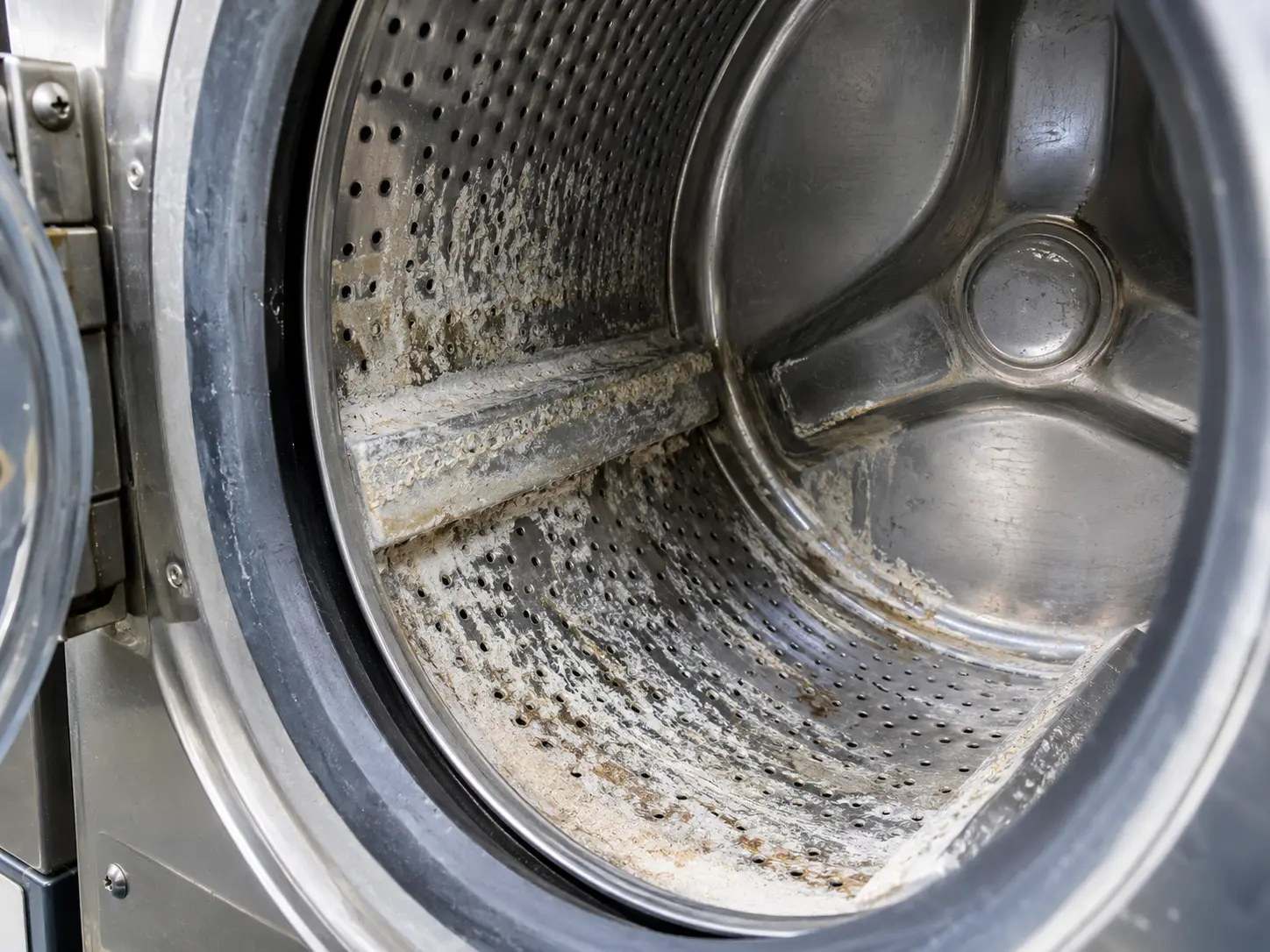
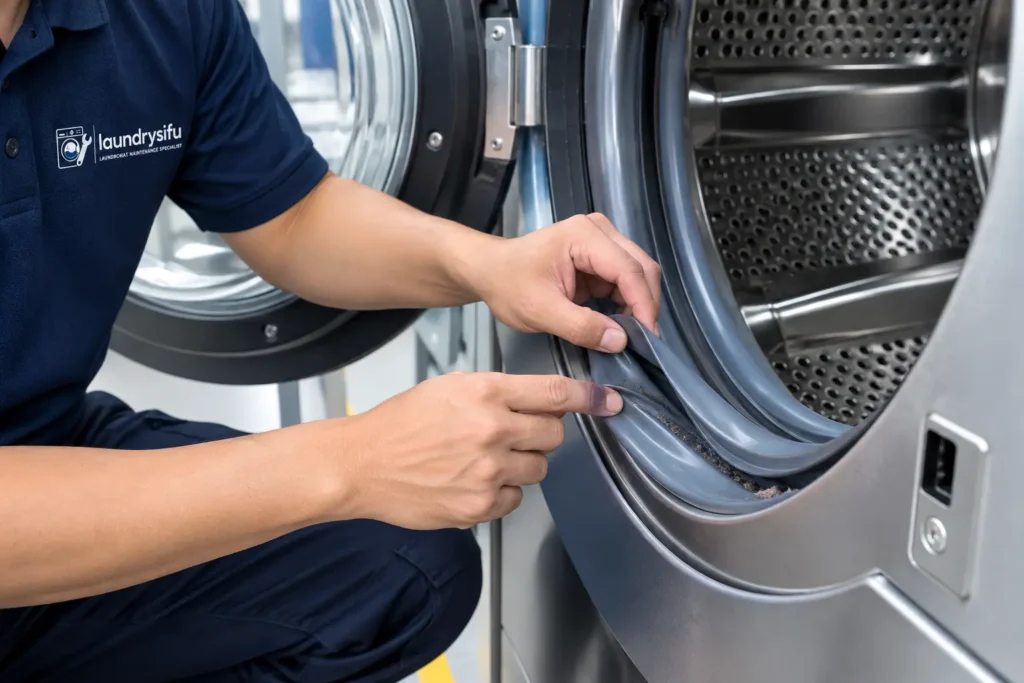
Door leaks come from a worn gasket or from something stuck between the gasket and the door. Check the gasket first because it is the cheapest and quickest fix.
Run your hand around the full ring of the gasket, including the folds at the bottom. Look for cracks, holes, hardened rubber and trapped items. This front-load washer leak troubleshooting guide from LG explains how hair or debris caught between the door and gasket can let water through even when the rubber is intact.
In a laundromat, customers overload machines, wash items with sharp zips or buckles, and leave coins or small objects in pockets. All of that wears the gasket faster than normal household use. A torn gasket cannot be cleaned back into shape, so it needs replacing.
Why is my commercial washer leaking from the back?
Rear leaks are almost always a hose, a hose connection or the inlet valve. The first two are visible. The valve usually needs a technician.
Check these points with the machine off and the water closed:
- Inlet hose connections at the tap and at the machine
- Hose clamps that have loosened from vibration
- Cracks, bulges or wet patches on the hose
- Drain hose seated properly in the standpipe, not pushed in too far
An inlet valve that sticks partly open can drip or spray water into the machine, and replacing it is professional work. Hoses also wear with use: State Farm explains how the pressure change each time a washer’s valve shuts off weakens its hoses. A busy laundromat machine goes through that cycle many times a day.
Why is my commercial washer leaking underneath?
Water under the machine points to the drain pump, an internal hose or a tub seal. These sit inside the machine, so the repair is a technician job.
Warning signs include grinding or humming during the drain cycle and water that appears mainly while draining.
Before you call, rule out two simple causes. Check that the drain hose has not slipped out of the standpipe, and check that detergent dosing is not too high. Oversudsing from too much detergent is a common cause of leaks, and it is easy to correct.
What can a laundromat owner check, and what should a technician handle?
For any commercial washer leaking, owners can safely check the gasket, hose visibility, drain hose position and detergent dosing. Anything behind a panel, anything electrical and anything involving the pump, valve or tub seal belongs to a technician.
| Owner-safe checks | Technician work |
|---|---|
| Clean the gasket and remove trapped debris | Replace a torn gasket |
| Re-seat the drain hose in the standpipe | Replace the drain pump |
| Tighten visible hose clamps (machine off, water closed) | Replace the inlet valve |
| Check detergent type and dose | Repair internal hoses or tub seals |
| Look for hose cracks and bulges | Trace leaks behind panels |
This guide to washer leaks by location from Fix.com is a useful second reference for matching a leak to its source. Technical work on a laundromat machine normally happens in the service area behind the wall, away from your customers, so repairs do not have to disturb your trading hours.
Do Electrolux, Speed Queen and Huebsch washers leak in different places?
The common causes of a commercial washer leaking are similar across brands, because they all use gaskets, hoses, valves and pumps. What differs is the part design and how each machine is accessed. A brand-level fault still has to be confirmed on the machine itself.
If you run one of these brands, these pages explain how we service them:
- Electrolux laundry machine service in Malaysia
- Speed Queen laundry machine service
- Huebsch laundry machine service in Malaysia
How do you stop a commercial washer leaking again?
Preventive maintenance is the most reliable way to avoid repeat leaks. Inspect hoses and gaskets on a schedule, and replace parts before they fail, not after.
A simple weekly walk-through catches most early signs:
- Look behind the machines for damp spots on the floor.
- Check hoses for cracks, bulges and loose clamps.
- Inspect gaskets for tears and trapped debris.
- Confirm detergent dosing is in line with the machine’s specification.
- Listen for unusual noise during the drain cycle.
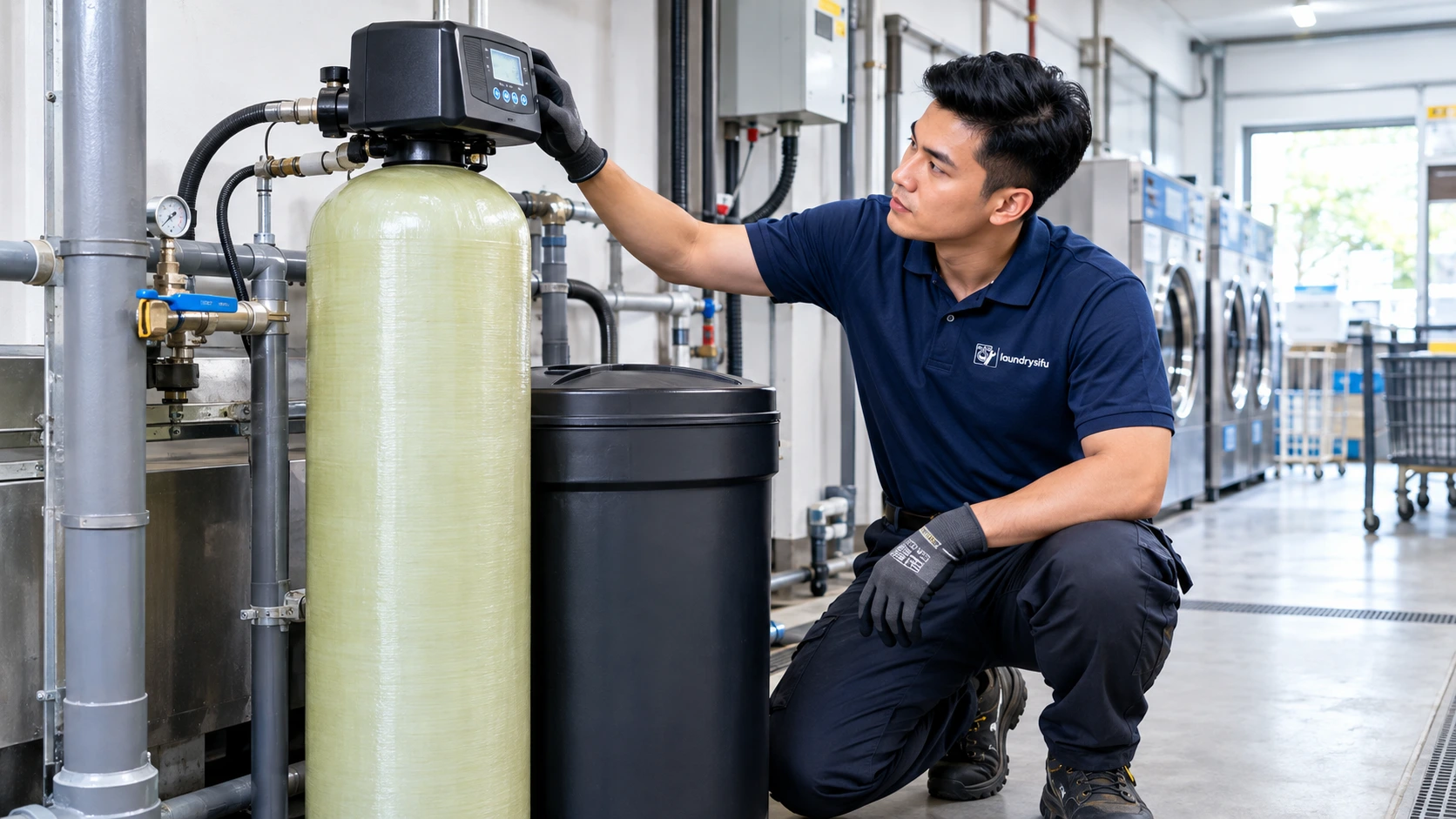
A replaced hose or gasket costs far less than a flooded shop and a machine that is out of service. Laundry Sifu’s commercial laundry service covers scheduled preventive maintenance for commercial washers, dryers, boilers and water systems. Customers on a maintenance contract also get a free 10-point health check. You can also watch our machine problem videos in the Laundry Sifu learning centre.
FAQ
Why is my commercial washer leaking water from the bottom?
Bottom leaks usually come from the drain pump, an internal hose or a tub seal. A loose drain hose or blocked standpipe can also send water to the floor. Stop the machine and call a technician, because these parts sit inside the machine.
Can I keep using a commercial washer leaking a little?
No. A small leak can get worse without warning, and water can reach electrical parts or create a slip hazard. Take the machine out of service until the source is found and repaired.
How do I fix a commercial washer leaking from the door?
Clean the gasket and remove trapped debris, then check that the door closes fully. If the rubber is torn, cracked or hardened, the gasket needs to be replaced.
What does it mean if my commercial washer leaks while filling or while draining?
A leak while the machine fills points to the door seal. A leak while draining, with water slow to go down, points to a blocked drain.
What causes a commercial washing machine to leak from the back?
Rear leaks are usually a loose or cracked inlet hose, a worn hose connection or a faulty inlet valve. Turn off the water, inspect the visible connections, and call a technician if the valve is the source.
How often should I inspect washers for leaks?
A quick weekly walk-through works for most laundromats, with a deeper check on a maintenance schedule. Hoses and gaskets are the parts to watch because they wear with every cycle.
Next step
Find out where and when the machine leaks, take it out of service, and book a technician for anything inside the machine. To have a technician look at your washers before the next leak, call Laundry Sifu on +60-11-5872-4533 (Mon-Fri, 9am-5pm) or visit the Laundry Sifu services page to see how our maintenance works.