Quick Answer: Commercial laundry machine slow filling usually comes down to one of six causes: a partly closed supply valve, kinked hose, clogged inlet screen, low supply pressure, scale buildup, or a worn inlet valve. Checking the valve, hose, and screens takes about ten minutes and is the cheapest place to start.
A slow fill wastes cycle time, and in a laundromat cycle time is income. When one washer takes longer than its neighbours, customers wait, dryers sit idle, and the whole floor falls out of rhythm. The steps below take a commercial laundry machine slow filling problem from the free checks to the ones that need a technician, so you don’t pay for a callout you didn’t need.
What Causes Commercial Laundry Machine Slow Filling?
Less water is reaching the drum per minute, so something between your supply and the inlet valve is restricting flow. Work through the causes below from top to bottom.
| Cause | Telltale sign | Fix | Who |
|---|---|---|---|
| Supply valve partly closed | Slow on hot, cold, or both after site work | Open fully | Owner or staff |
| Kinked or crushed hose | Visible bend behind the machine | Straighten or replace | Owner or staff |
| Clogged inlet screens | One line slow, getting worse | Remove and clean | Owner or trained staff |
| Low supply pressure | Several machines slow at once | Check supply, pipe size, booster pump | Plumber or technician |
| Scale buildup | Gradual slowdown, worse on hot | Descale, replace parts, treat water | Technician |
| Worn inlet valve | Buzzing, uneven or one-line slow fill | Replace valve | Technician |
The first three cost nothing to check, so begin there.
What Should I Check First on a Slow-Filling Washer?
Run a ten-minute checklist: supply valves, hoses, then inlet screens. Do them in that order, because each step is quicker than the next.
- Supply valves. Confirm the hot and cold valves are fully open. Site work or a careless bump can leave one half closed.
- Hoses. Look behind the machine for kinks, crushed sections, or hoses pinched against the wall.
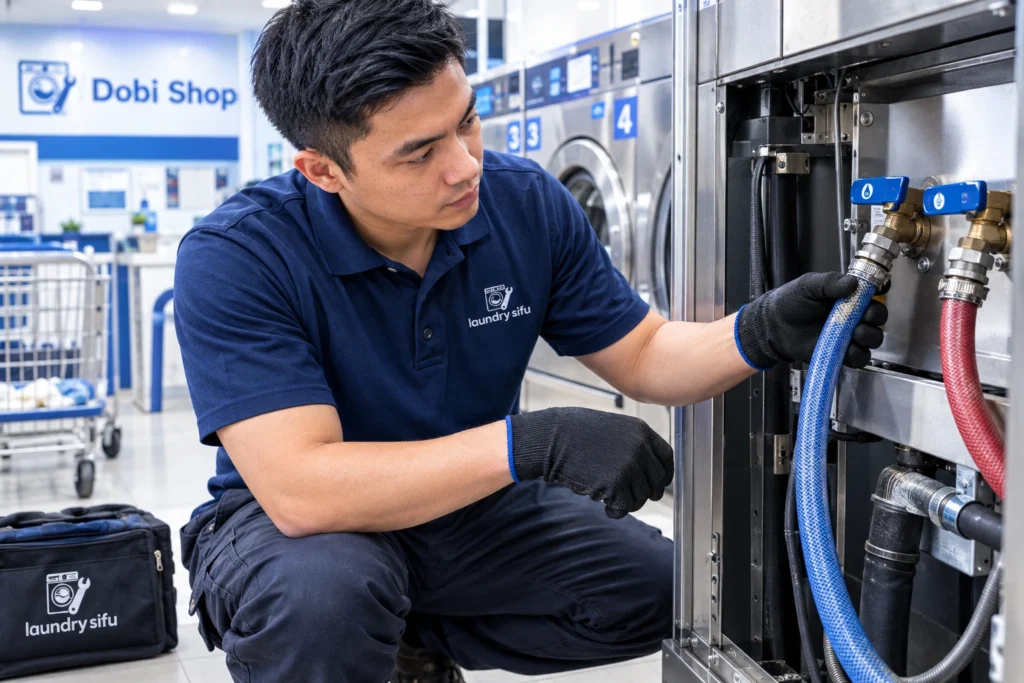
- Inlet screens. Switch off the power and close both valves. Unscrew the hoses, pull the small mesh screens from the inlet connections, rinse them, and brush off debris. Refit and check for leaks.
Screens exist to protect the inlet valve from sand, rust flakes, and pipe scale, which is why they clog. Debris often loosens after plumbing repairs or a supply interruption, so check them soon after any such event. Replace any screen that is torn, and check hot and cold separately because one often blocks before the other. Cleaning them quarterly is a sensible routine, and more often if your water carries visible sediment.
Is Low Water Pressure Behind Commercial Laundry Machine Slow Filling?
If several machines are slow at once, suspect the supply. If only one is slow, the fault is more likely local to that machine.
A bucket test helps. Close the valve, disconnect one inlet hose, and point it into a large bucket. Open the valve and time how long a known volume takes to fill, then repeat on a machine that fills normally. Wear eye protection and secure the hose, because commercial supply lines can spray.
Compare your result against the manufacturer’s figure. Speed Queen’s quick start installation guide gives a fill hose pressure range of 20–120 psi (138–827 kPa) and supplies filter screen washers for the hose connections. Other brands publish their own figures, so check the guide for your model.
Pressure that looks fine on a gauge when nothing is running can collapse when six machines call for water together. If a commercial laundry machine slow filling problem only shows up on busy afternoons, your pipe size or supply capacity may be too small for the number of machines you run.
Can Hard Water Scale or a Worn Inlet Valve Cause Slow Filling?
Yes. Scale narrows pipes and blocks the small passages inside the inlet valve, and a worn valve may not open fully even when the supply is healthy.
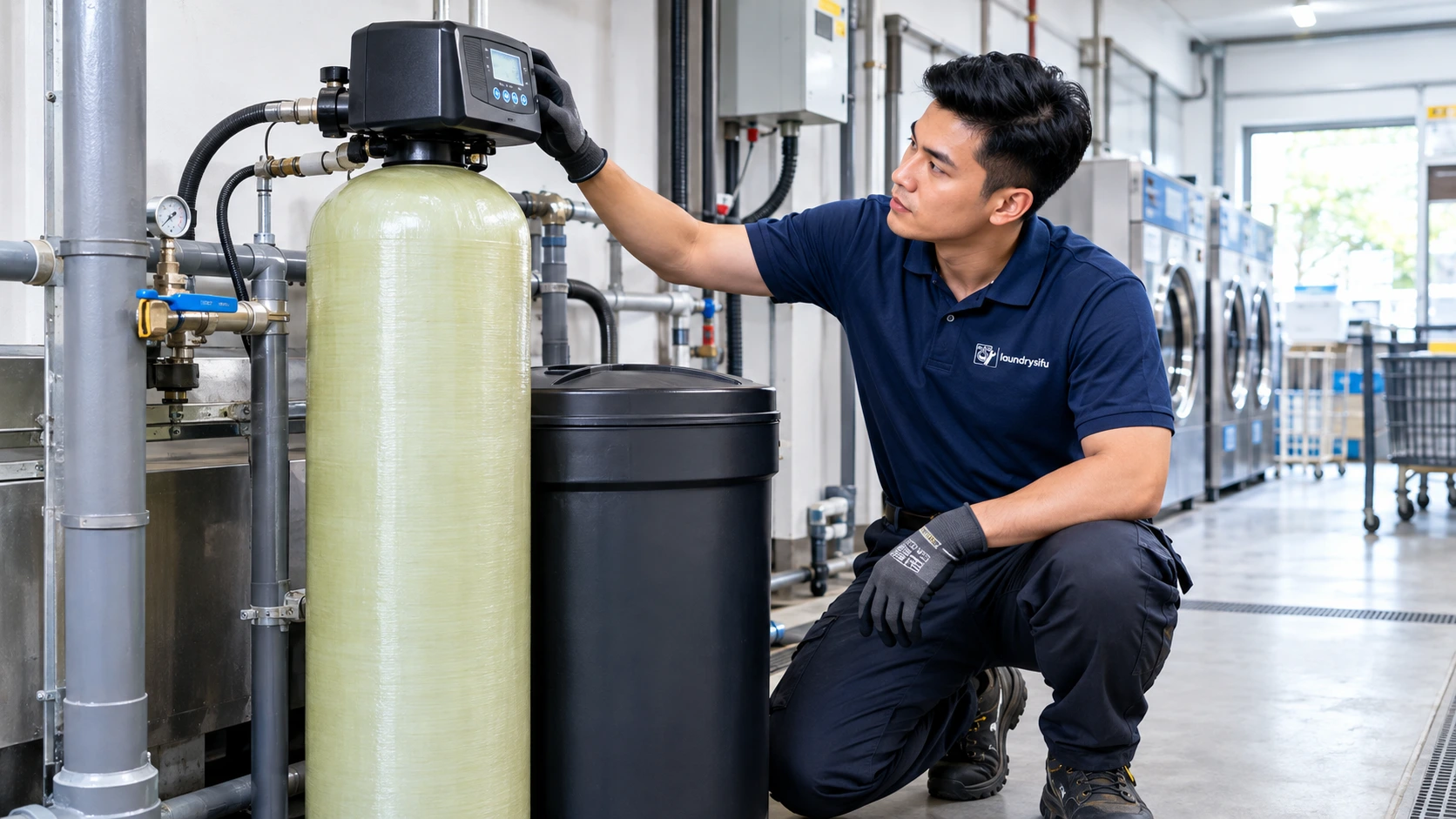
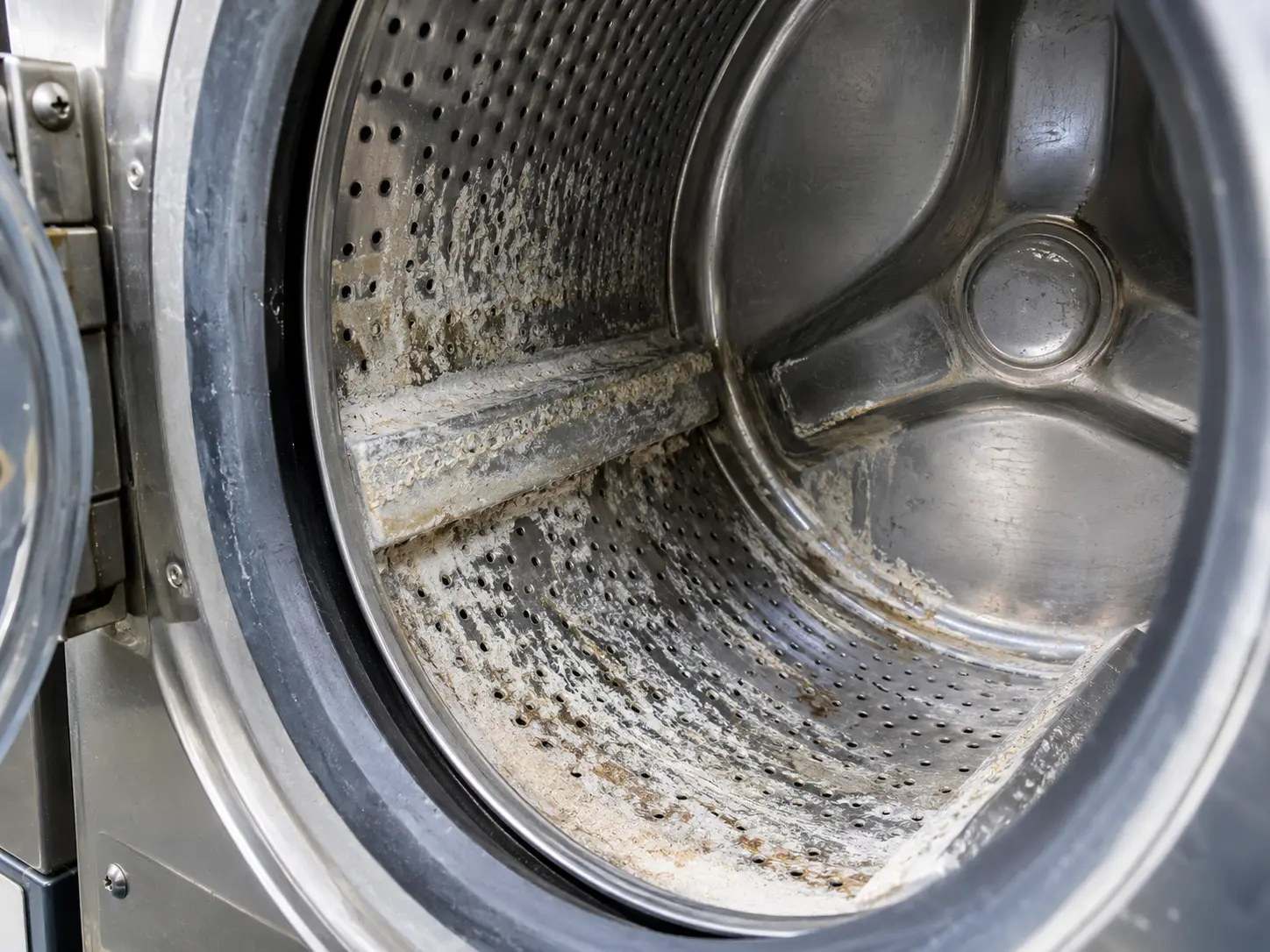
USGS water-quality guidance notes that hard water forms scale in boilers, water heaters, and pipes, and classes water above 180 mg/L as calcium carbonate as very hard. Hot lines are hit first, so a hot fill that is slower than the cold fill points to scale. That makes scale a frequent cause of commercial laundry machine slow filling in hard water areas.
Signs of a failing inlet valve include:
- One line (hot or cold) filling much slower than the other
- A buzzing or humming valve that doesn’t deliver full flow
- Uneven fills or fill-time faults
Cleaning screens won’t cure these. The valve must be tested and, if worn, replaced with the correct part for your model. If scale is the cause, treat the water (softening or scheduled descaling), or the problem will return.
Why Do Only Some Machines Fill Slowly?
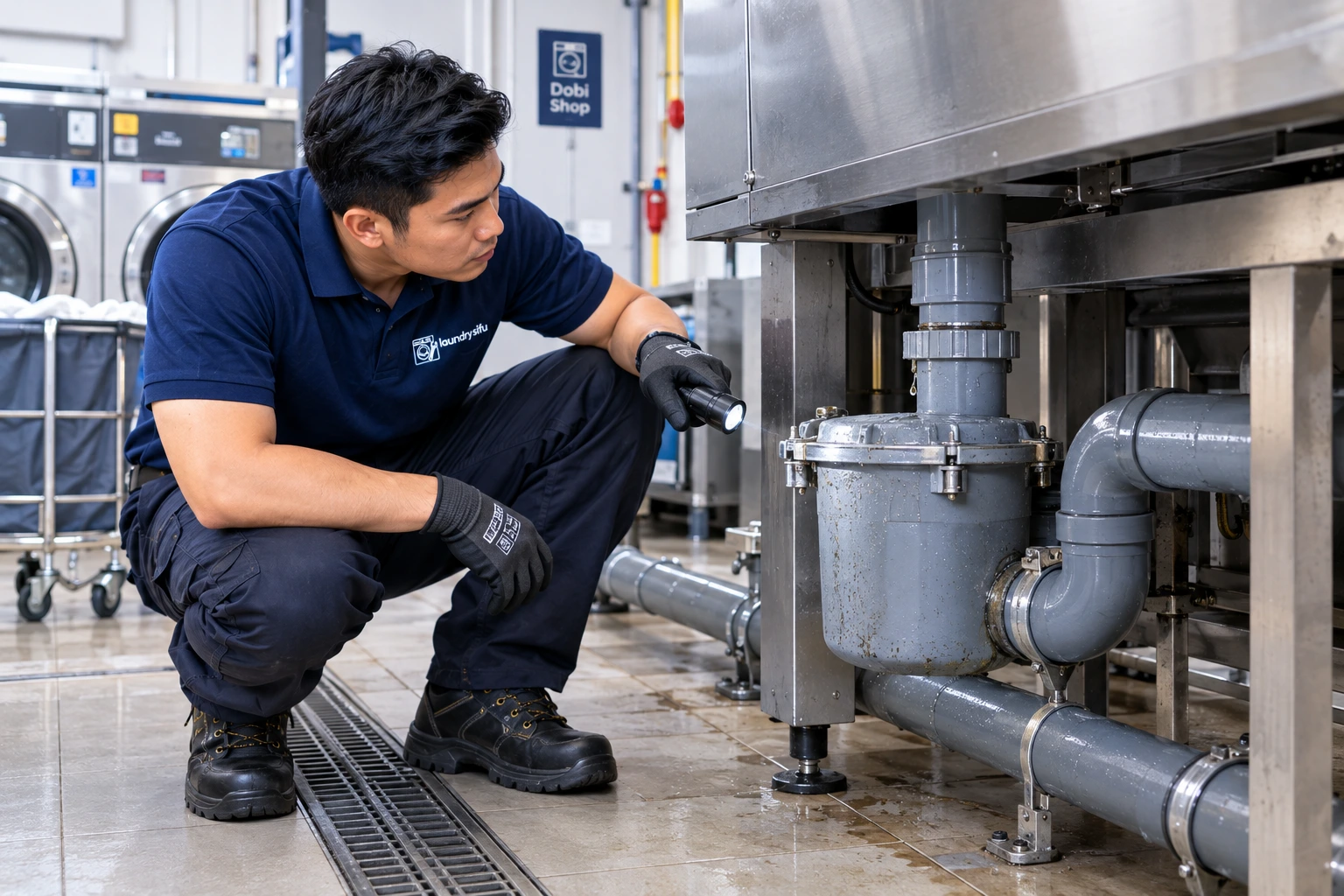
Distance from the main supply and shared branch lines decide which machines lose pressure first. Uneven fill times across a floor usually mean a supply layout problem, not a machine fault.
| Pattern | Likely meaning |
|---|---|
| Slow only when every machine is running | Supply can’t meet total demand |
| Slow only at the end of a pipe run | Pipe sizing or a long, narrow branch |
| Slow on one machine only | Local hose, screen, or valve fault |
| Slow on hot only | Heater output or scale on the hot line |
Keep a simple log of which machines slow down and when. It is the most useful thing to hand a technician and can shorten diagnosis considerably.
When Should I Call a Technician?
Call one if the valves, hoses, and screens are fine and the fill is still slow, or if you suspect scale, a faulty valve, or an undersized supply. Repeated slow fills also suggest preventive maintenance is overdue.
Parts and fault codes differ by brand, so the right fix depends on your machine. Laundry Sifu services commercial laundry equipment across brands, including Electrolux laundry machine service in Malaysia, Speed Queen laundry machine service, and Huebsch laundry machine service in Malaysia. The full range is on the Laundry Sifu services page.
Commercial laundry machine slow filling is often an early warning, not a one-off fault. Scheduled maintenance of valves, screens, and water systems catches restrictions before they become downtime. To book a check, start from the Laundry Sifu homepage.
Frequently Asked Questions
How long should a commercial washer take to fill?
It varies with model, drum size, and water level, so there is no universal number. Use a healthy machine of the same model as your baseline. A machine that takes clearly longer than its identical neighbours needs checking.
Can a dirty inlet screen really slow filling that much?
Yes. The mesh is fine and sits directly in the flow path, so a partly blocked screen cuts flow to the valve. It is also the cheapest first check.
Why is my commercial laundry machine slow filling on hot only?
The problem is on the hot side: a partly closed hot valve, a clogged hot screen, scale, or weak heater or boiler output. If the cold fill is normal, the cold-side valve is probably fine.
Will a water booster pump fix slow filling?
Only if low supply pressure is the real cause. It won’t help with a clogged screen, kinked hose, or worn valve, so diagnose first.
Is it safe to clean inlet screens myself?
Generally yes, once you switch off the power, close both supply valves, and relieve residual pressure. If you’re unsure about your model or find damage or leaks, leave it to a qualified technician.
Next Step
If you’re dealing with commercial laundry machine slow filling, spend ten minutes on valves, hoses, and inlet screens before calling anyone. If the fill is still slow, note which machines are affected and when, then have a technician test the pressure and inlet valves.