
Quick Answer: A commercial laundromat service has three core parts: turnkey setup, equipment supply and ongoing maintenance for self-service laundries. For Malaysian operators, uptime decides profit because every idle machine earns RM0. Choose a provider with fast technician response, clear warranty and spare-part terms, and a preventive plan of at least two checks a year.
Choosing a commercial laundromat service is one of the biggest early decisions for anyone opening or running a kedai dobi. The right partner helps you open on schedule and keeps your machines earning. This guide from Laundry Sifu explains what to expect and what to check before you sign anything.
What Is a Commercial Laundromat Service?
A commercial laundromat service is the support a self-service or coin laundry needs to start and keep trading. It usually covers business setup and consultation, equipment supply, and maintenance and repair. Some companies offer all three, while others specialise in one.
Do not confuse it with a wash-and-fold or pickup-and-delivery laundry. Those businesses wash linen on your behalf. A commercial laundromat service supports the machines and the shop where customers wash for themselves.
In Malaysia the term often overlaps with mesin basuh komersial supply and repair. Laundry Sifu focuses on the maintenance and repair side, helping operators keep washers and dryers running.
What Does a Commercial Laundromat Service Include?
A full commercial laundromat service typically includes setup consultation, equipment supply and ongoing maintenance. The table below shows what each part covers and what you should ask about it.
| Service area | What it covers | What to ask |
|---|---|---|
| Setup and consultation | Site selection, feasibility study, layout planning, branding, renovation | Is the plan based on my catchment area and utilities? |
| Equipment supply | Washers, dryers, stacked dryers, coin, card or app-based payment systems | Which brands, and what are the delivery lead times? |
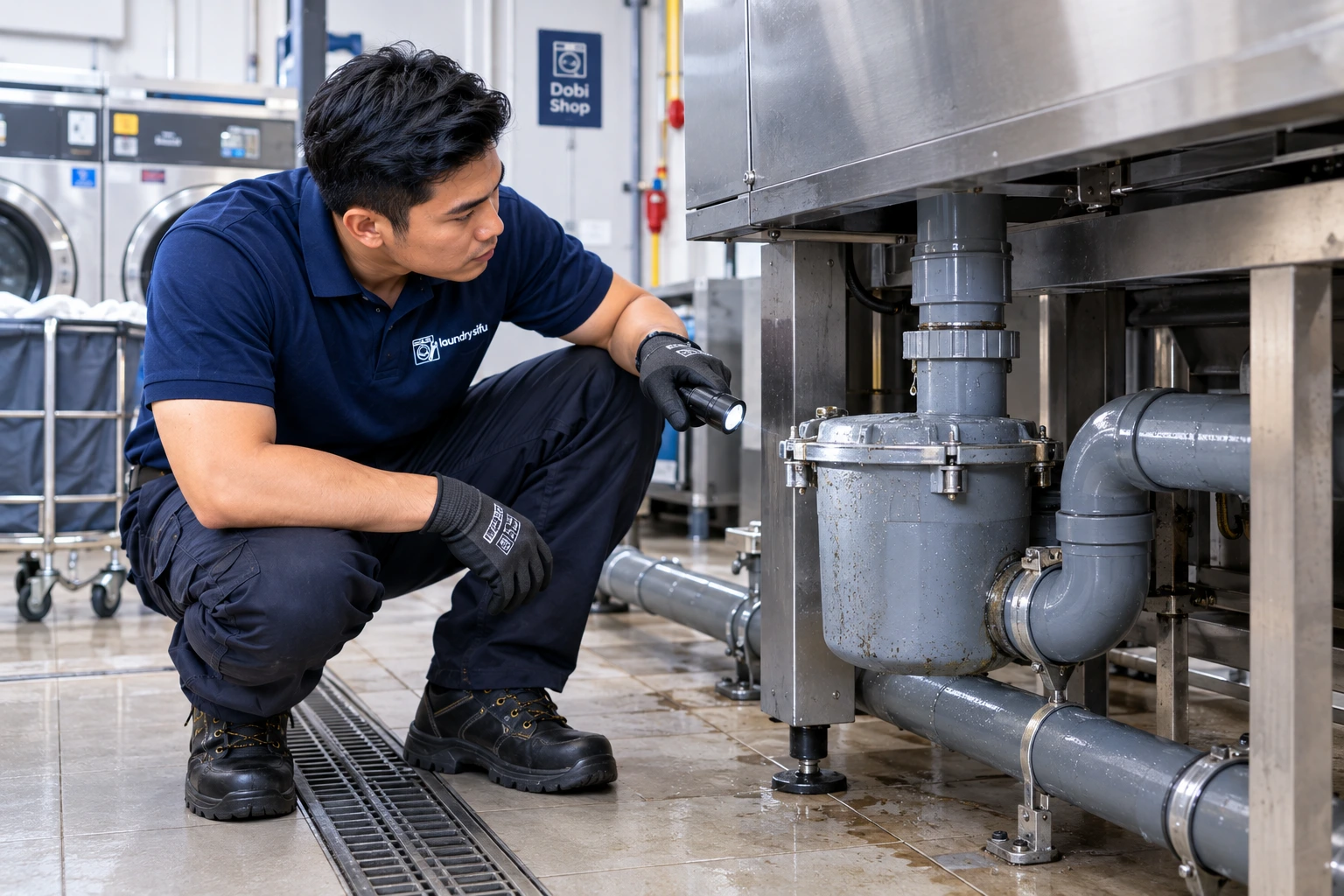
| Maintenance and repair | Preventive servicing, breakdown troubleshooting, genuine spare parts | How fast is the response, and are parts stocked locally? |
Setup help matters most before you open. Maintenance matters every month after that.
Many owners spend their energy on the first and plan too little for the second. That gap is where most avoidable losses start.
Who Needs a Commercial Laundromat Service?
Anyone running or planning a self-service laundry can use one, but the type of support differs. First-time owners need setup guidance. Existing owners mostly need reliable repair and servicing.
- First-time owners planning a new outlet, who need site, layout and equipment advice
- Single-outlet operators who need quick repairs and a regular servicing schedule
- Multi-outlet operators who need one provider across several locations
- Owners taking over an existing shop with older machines of unknown condition
- Serviced apartments and hostels that run a coin laundry room for residents
If you are taking over a shop, ask a technician to inspect every machine before you finalise the deal. A short inspection can reveal worn bearings or failing payment units that the seller has not mentioned.
How Much Does a Commercial Laundromat Service Cost in Malaysia?
There is no standard price. Setup packages, equipment and servicing are usually quoted separately, and the total depends on shop size, number of machines and the payment system you choose. Ask for itemised written quotes and compare the same scope.
Think about downtime as a cost too. As a hypothetical example, if a bank of machines earns RM300 a day and stops for four days, you lose RM1,200 in sales before paying for the repair. Your own figures will differ, but the sum shows why fast repair matters.
Running costs matter as well. Check the current commercial tariff on the Tenaga Nasional Berhad (TNB) website before you model your electricity bill.
Which Machine Brands Suit a Commercial Laundromat Service?
Choose brands that local technicians can service and whose parts you can actually obtain. A good machine on paper is a poor choice if a part takes weeks to arrive. Laundry Sifu supports three brands used by Malaysian operators.
Electrolux machines
Electrolux Professional makes commercial washers and dryers used in laundromats, hotels and healthcare. Our Electrolux laundry machine service covers repairs and routine maintenance.
Speed Queen machines
Speed Queen is a familiar name in self-service laundromats. See our Speed Queen laundry machine service for repair and maintenance support.
Huebsch machines
Huebsch is a sister brand of Speed Queen under Alliance Laundry Systems. Our Huebsch laundry machine service in Malaysia follows the same approach: find the fault, fix it and prevent a repeat.
Other brands, such as LG, are also supplied to laundromats. Whatever you buy, confirm who services it and how quickly before you place the order.
What Should You Check Before Hiring a Commercial Laundromat Service?
Check three things first: response time, warranty and spare parts, and the preventive maintenance plan. Get every answer in writing, not over the phone.
- Response time: how quickly will a technician attend on a busy weekend or public holiday?
- Warranty: how long does it last, what does it exclude, and who pays for labour?
- Spare parts: which wear parts are stocked locally, and what is the lead time for imported ones?
- Preventive contract: how many visits a year, and what does each visit cover?
- Coverage: does the provider serve your area, and can they support more than one outlet?
- Payment systems: can they fix coin, card and app-based payment faults?
A provider that answers these clearly usually runs a tidy operation. Vague answers are a warning sign.
Turnkey or Separate: Which Commercial Laundromat Service Fits?
A turnkey package suits first-time owners who want one point of contact. Separate providers suit experienced owners who already know what they need. Neither is always cheaper, so compare the full scope.
| Factor | Turnkey package | Separate providers |
|---|---|---|
| Best for | First-time owners | Experienced owners and existing shops |
| Accountability | One company answers for everything | You coordinate each supplier |
| Flexibility | Limited to the package | Choose the best supplier for each need |
| Servicing after opening | Often tied to the seller | You can appoint an independent technician |
| Main risk | Paying for items you do not need | Gaps between suppliers when something fails |
Whichever route you take, keep servicing options open. An independent maintenance partner can look after machines you bought elsewhere, and that gives you a backup if your supplier is slow to respond. A good commercial laundromat service should never be a single point of failure.
How Often Should Laundromat Machines Be Serviced?
Most operators benefit from technician visits at least twice a year, and quarterly for busy outlets. Always follow the schedule in the manufacturer’s manual, and treat the table below as general good practice.
| Frequency | Typical tasks | Done by |
|---|---|---|
| Daily | Wipe door seals, clear lint filters, test payment readers, look for leaks | Shop staff |
| Weekly | Clean detergent drawers, check drains, inspect hoses | Shop staff |
| Quarterly or half-yearly | Check belts, bearings, motors, heating elements, door locks and water inlets | Technician |
| After any fault | Find the root cause, not just replace the part | Technician |
Staff checks cost only a few minutes. They catch lint build-up and worn seals before they turn into a repair call.
How Do Malaysian Conditions Affect a Laundromat?
Humidity and rainy-season weather slow drying and push dryers harder, which raises electricity use. Good ventilation and clean lint filters help with both cost and fire risk.
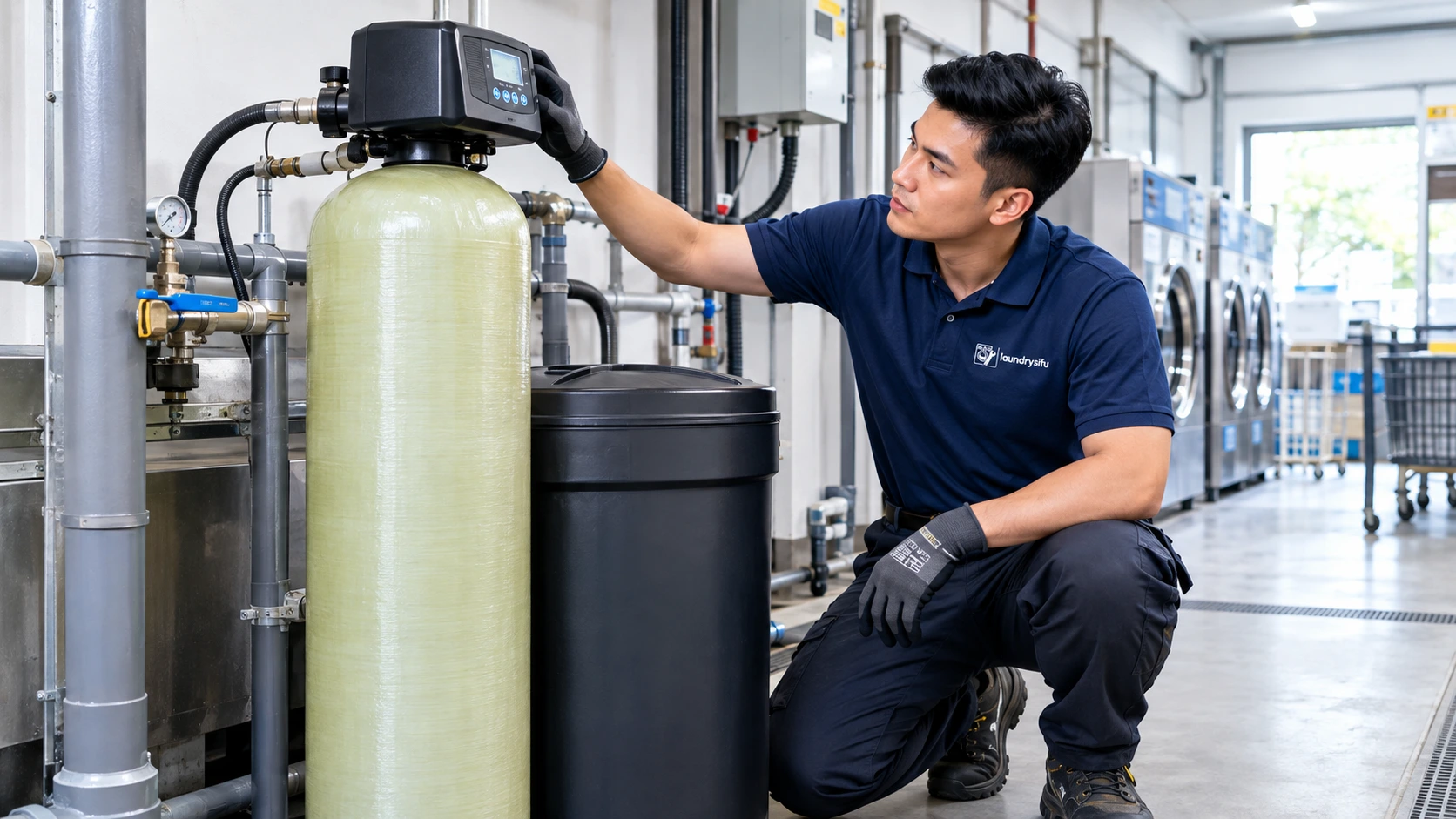
Power and water matter too. Review tariffs with TNB, and note that water services in Peninsular Malaysia are regulated by SPAN. Ask your technician to check your supply and water pressure during installation.
Register your business with SSM, and check premises licensing requirements with your local council (PBT) [VERIFY].
In dense areas such as the Klang Valley, Johor Bahru and Penang, traffic can add hours to a repair visit. When comparing any commercial laundromat service, ask where the technician is based and how spare parts are sourced.
What Are the 7 Costly Mistakes With a Commercial Laundromat Service?
These are the errors Malaysian laundromat owners most often run into, from setup through daily trading.
1. Buying machines before checking service support
A low purchase price means little if nobody nearby can repair the machine. Ask who services the brand locally before you order. Get the answer in writing.
2. Skipping a preventive maintenance plan
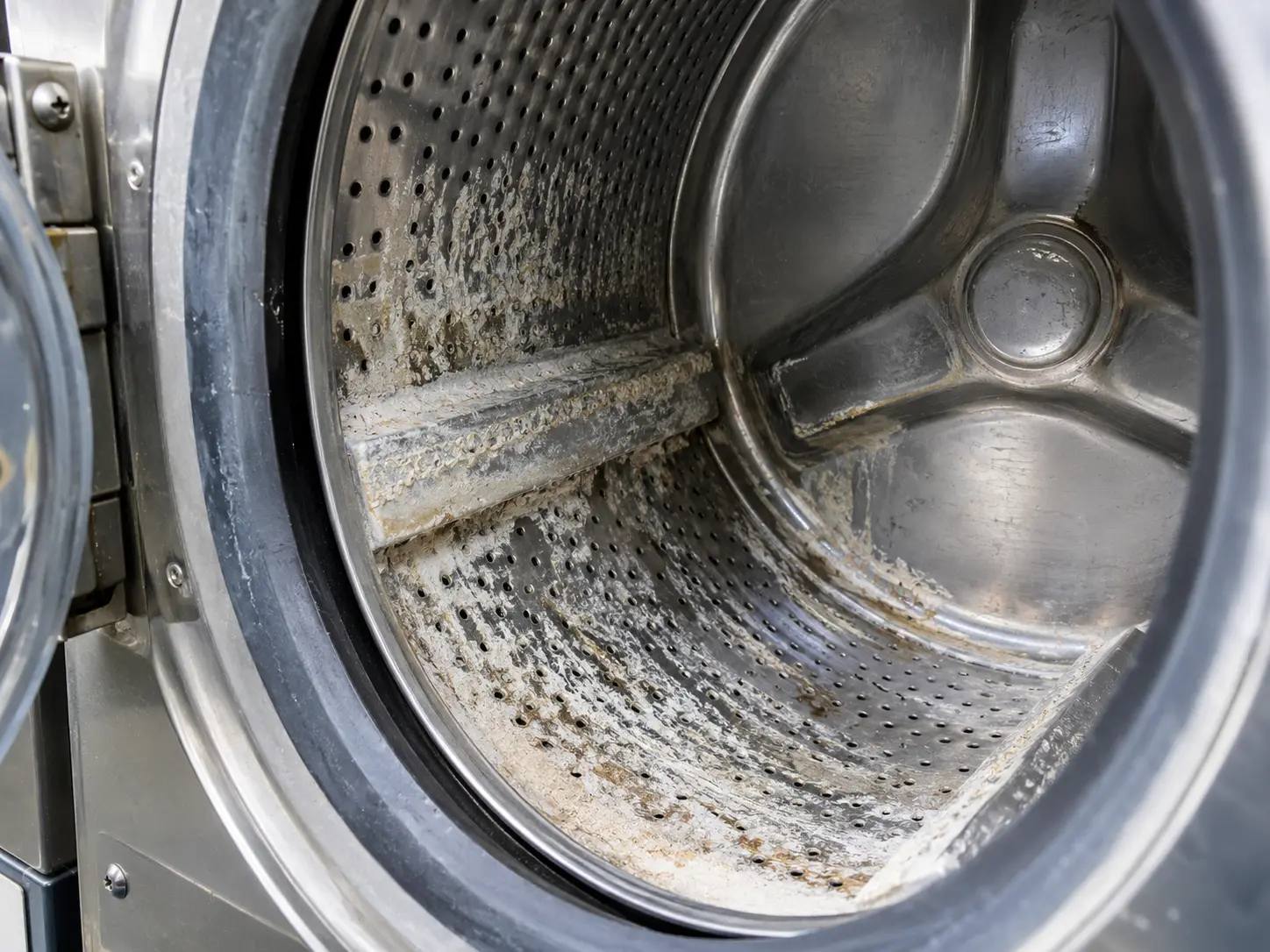
Lint, worn belts and loose connections build up quietly, then fail at the worst time. Scheduled visits cost far less than emergency downtime. Put at least two technician checks a year into your budget.
3. Ignoring warranty fine print
Warranties differ on parts, labour and exclusions. Misuse, poor installation or unauthorised repairs can void cover. Read the terms before signing, not after a breakdown.
4. Underestimating spare-part lead times
Imported parts can take longer to arrive, and a shop with no stock can sit idle. Ask which wear parts are kept locally. Hold a small stock of the common ones yourself if you can.
See the fix in action in our official video: commercial laundromat service machine repair video.
Our Learning Centre also carries new videos on common commercial laundry machine problems.
5. Overlooking payment-system faults
A washer that works but cannot take payment earns nothing. Coin mechanisms, card readers and app systems each fail differently. Confirm that your provider can repair the payment side, not just the machine.
6. Choosing a site without checking utilities
Weak electrical capacity, low water pressure or poor drainage cause repeated faults. Check all three before you sign a tenancy. Ask a technician to inspect the site if possible.
7. Waiting for a breakdown to find a technician
Searching for help while customers walk out is expensive. Save the contact of your commercial laundromat service technician before you open. For several outlets, agree a response time in advance.
FAQ: Commercial Laundromat Service in Malaysia
What is included in a commercial laundromat service?
It usually includes setup consultation, equipment supply and ongoing maintenance and repair. Some providers offer only one of these, so confirm the scope before you agree.
How much does it cost to set up a laundromat in Malaysia?
Costs vary with shop size, machine count and payment system. Ask several suppliers for itemised written quotes covering setup, equipment and servicing.
How often should laundromat machines be serviced?
Technician visits at least twice a year suit most shops, and quarterly visits suit busy outlets. Staff should also clean lint filters and check seals daily.
How quickly should a technician respond to a breakdown?
There is no single standard. Ask each provider for a committed response time in writing, especially for weekends and public holidays.
Who repairs Electrolux, Speed Queen and Huebsch laundromat machines?
Laundry Sifu services Electrolux, Speed Queen and Huebsch commercial laundry machines. Use the enquiry route on our services page to describe your fault.
Ready to Choose Your Commercial Laundromat Service?
Start with one question: who will fix your machines the day they stop? If you do not have a clear answer, sort that out before your next busy weekend.
Send an enquiry or WhatsApp message through our commercial laundry machine services page, and tell Laundry Sifu your machine brand, model and the fault you are seeing.