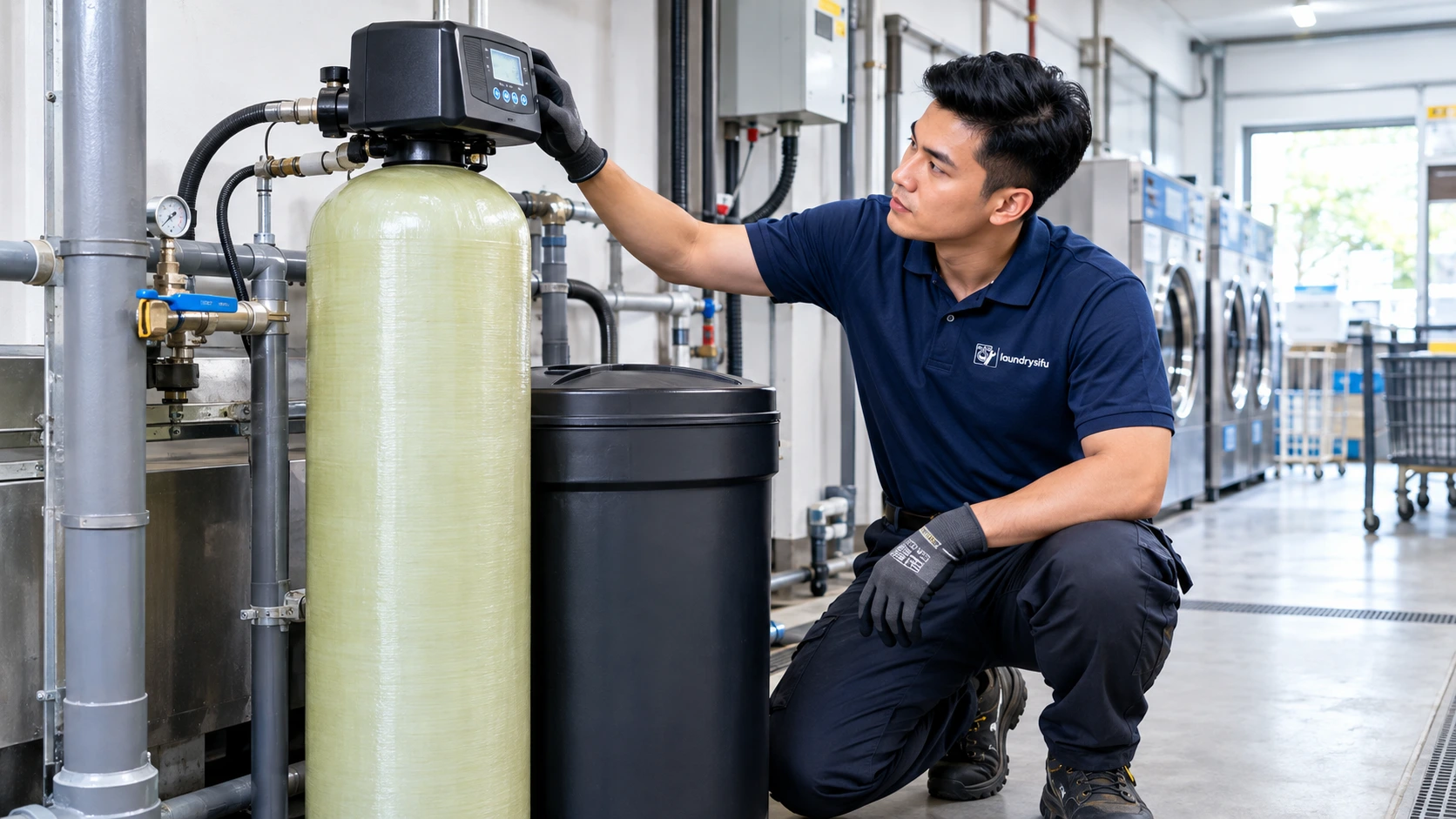
Quick Answer: A laundry drainage system carries used wash water from your machines through drain outlets, traps and sloped pipework into the sewer or an approved treatment point. For commercial sites, the pipes must be sized for large bursts of water, fitted with a lint filter and trap, and cleaned regularly. Laundry Sifu has serviced Malaysian laundromats since 2014.
A poorly planned laundry drainage system is one of the quietest ways to lose money in a kedai dobi. Water backs up, machines stop mid-cycle and customers leave. This guide explains how a laundry drainage system works, where Malaysian shops go wrong and how to keep water flowing.
What Is a Laundry Drainage System and How Does It Work?
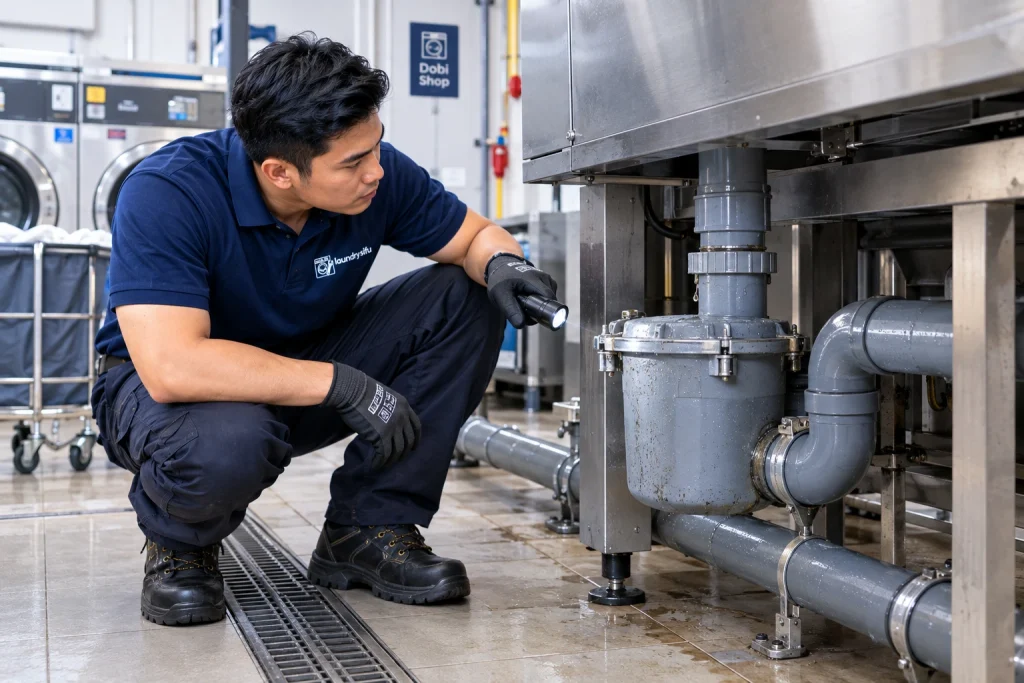
A laundry drainage system is the set of outlets, traps, pipes and filters that move used wash water away from your machines and into the building drain. Water leaves the machine, passes through a trap and runs by gravity to the sewer or an approved discharge point.
At home, that usually means one washer and one pipe. In a commercial shop, a dozen machines may empty at once, so the design matters far more.
What Are the Main Laundry Drainage Options?
Most setups use one of three connection types. This table compares them for a Malaysian shop.
| Option | How it works | Best for | Main risk |
|---|---|---|---|
| Standpipe | A vertical pipe with a trap below. The drain hose sits loosely in the top. | Single machines and small outlets | A hose pushed in too far can siphon water out of the drum. Narrow pipes block quickly. |
| Laundry tub or utility sink | The hose hooks over the sink edge, and the sink drains through its own trap. | Hotel housekeeping and back-of-house areas | Lint collects in the sink trap, and the hose can slip and spill. |
| Floor or trench drain | Water flows from the machine outlet into a drain set in the floor. | Large washers and rows of machines | It needs an air gap or siphon break. Blocked grates cause flooding. |
Standpipes and sinks suit household-scale machines. Larger commercial washers usually discharge to a floor or trench drain, but the right choice depends on the model, so check the installation manual before any plumbing work.
Why Does a P-Trap Matter in a Laundromat?
A P-trap is a curved section of pipe that holds a small plug of water. That water seal stops sewer gas from rising into your shop.
In Malaysia’s heat, the seal in a rarely used drain can evaporate, and the smell returns. Pour a litre of clean water into seldom-used floor drains each week to refill it.
How Does a Commercial Laundry Drainage System Differ?
A commercial laundry drainage system handles larger water volumes, more lint and harsher chemicals than a household one. A pipe that copes with one home washer can overflow when several 14kg to 32kg machines drain together.
These are the differences we see most often in Malaysian shops:
- Volume: Large washers release water in fast bursts, so drains must cope with peak flow, not average flow.
- Lint and fibres: Towels, bedsheets and uniforms shed lint every cycle, and it packs into traps and bends.
- Grease and chemicals: Restaurant and hotel linen carries oil and detergent residue that coats the pipe wall.
- Temperature: Hot discharge can soften unsuitable pipe, so check the pipe’s temperature rating against your hottest programme.
- Shared pipework: Rows of machines often feed one line, so a single blockage can flood several machines.
Which Laundry Drainage System Details Matter by Brand?
Every brand sets its own drain connection, valve or pump arrangement and capacity limits. Whatever the brand, your laundry drainage system must match the machine’s outlet and discharge rate. Follow the model’s installation manual, and see the product documentation on the Electrolux Professional website for Electrolux machines.
| Brand | Models common in Malaysian shops | What we check at the drain |
|---|---|---|
| Electrolux | WN6-14, WN6-28, WS6-14 and WS6-28 washers | Drain valve action, outlet connection and pipe capacity for 14kg and 28kg discharge |
| Speed Queen | Popular laundromat washers across common capacities | Drain pump or valve action, hose condition and lint at the outlet |
| Huebsch | Washers from about 14kg to 32kg, the range most owners choose | Drain pump or valve action, outlet fit and shared pipe loading |
Our service pages explain what each visit covers: Electrolux laundry machine service, Speed Queen laundry machine service and Huebsch laundry machine service.
What Are the 5 Costly Mistakes in a Laundry Drainage System?
These five mistakes cause many of the blockages and floods we are called to. Each one is easy to avoid in a well-planned laundry drainage system, and fixing them costs far less than a weekend of lost trade.
1. Undersized or Shared Pipework
Home rules of thumb, such as a single 50mm (2-inch) standpipe, do not scale to a row of large washers. Pipe size for a shared laundry drainage system should follow the combined peak discharge of every washer on the line.
Ask a competent plumber to design it, and confirm local requirements with your council (PBT).
2. No Lint or Solids Filtering
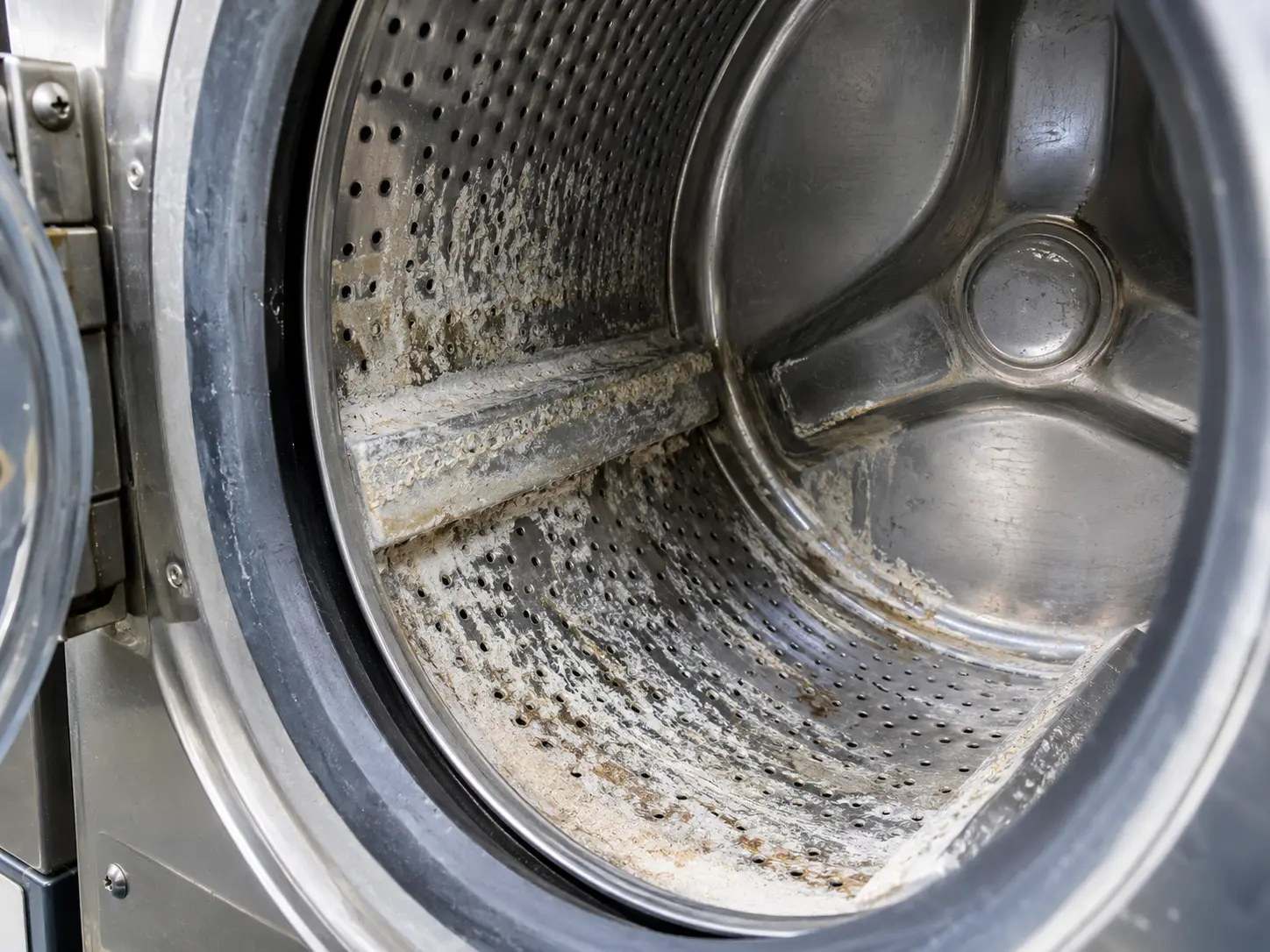
Lint is the most common cause of slow drains in busy shops. It packs into traps and elbows, then binds with detergent residue and body oils.
Fit a removable lint basket or filter where each machine discharges, and empty it on a schedule. Household tricks such as a stocking over the hose do not survive commercial flow.
3. Poor Slope and Long Flat Runs
Drain pipes need a continuous fall so water and lint keep moving. A laundry drainage system with flat or sagging sections holds water, and solids settle there.
Required slopes depend on pipe size, so ask your plumber to confirm the fall against the Uniform Building By-Laws 1984 and your local council’s rules.
4. Wrong Hose Fit and No Air Gap
If a drain hose is pushed deep into a pipe or sealed tight, water can siphon out of the drum while it fills. The hose should sit loosely so air can break the siphon, and the connection height must follow the manufacturer’s manual.
Many online guides quote standpipe heights from US plumbing codes. Do not copy those figures for a Malaysian shop.
5. Cleaning Only After a Flood
Many shops clean drains only after water reaches the floor. By then, the blockage has often been building for weeks.
Every laundry drainage system needs a written routine. It is usually cheaper than emergency call-outs and lost trade.
What Are the Warning Signs of a Failing Laundry Drainage System?
The earliest signs of a failing laundry drainage system are slow draining, water left in the drum and gurgling floor drains. Catching them early prevents overflow.
- Water still sitting in the drum when the cycle ends
- Gurgling or bubbling from nearby floor drains
- A sewer smell, often from a dry or damaged trap
- Damp patches or pooling water around the machine base
- Repeated drain-related error codes on the display
- Water from one machine rising in the drain of another, which points to a blocked shared line
See the warning signs in action in our official video: how to spot a laundry drainage system problem when a washer starts to flood.
If you see these signs, stop the affected machines before water reaches electrical parts or your customers’ feet.
How Do You Maintain a Laundry Drainage System in Malaysia?
Keep a simple routine: clear lint daily, check traps weekly and clean the whole line on a set schedule. Heat, humidity and heavy rain make a laundry drainage system work harder here than in cooler climates.
| Frequency | Task | Why it matters |
|---|---|---|
| Daily | Empty lint baskets and wipe floor drain grates | Stops fibres packing into the pipes |
| Weekly | Refill rarely used traps and check hoses for kinks and cracks | Keeps the water seal intact and catches leaks early |
| Monthly | Lift trench covers, scrub out sludge and look for pooled water | Prevents slime and mould in humid conditions |
| Every 6 to 12 months | Professional jetting or camera inspection of main lines | Clears hidden build-up before it causes a flood |
How Does Malaysia’s Climate Affect a Laundry Drainage System?
Humidity encourages slime and mould in trenches and traps. Daily heat also dries out trap seals in unused drains.
Heavy downpours can overload public drains and push water back through low floor drains, a risk in low-lying parts of the Klang Valley and other cities. Clear external drains and gully traps before the rainy months, and ask your landlord or council about backflow protection.
Do Home Remedies Work on a Commercial Drain?
Hot water flushes and baking soda may loosen light residue in a small home line. They will not clear packed lint or grease deep in a shared commercial pipe.
Boiling water can also damage plastic pipes, and strong chemical cleaners can attack seals and drain pumps. Use mechanical cleaning instead.
What Rules Apply to Laundry Wastewater in Malaysia?
Your wastewater must go to an approved point, and the rules that apply depend on your premises. Before you change or extend your laundry drainage system, check with your council (PBT) and the agencies below.
- Sewerage connection: Indah Water Konsortium is the main sewerage services operator in Malaysia, and the place to start for connection questions.
- Effluent and sewage standards: The Department of Environment Malaysia enforces the Environmental Quality Act 1974 and its sewage and industrial effluent regulations.
- Building and plumbing approvals: Your local council (PBT) applies the Uniform Building By-Laws 1984.
We service machines and do not give legal advice, so confirm requirements directly with these bodies.
When Should You Call a Technician About Your Laundry Drainage System?
Call a technician when a washer drains slowly after you have cleared its filter, when drain error codes keep returning, or when water appears around the base. These can point to a failed drain pump, a faulty valve or a blocked pipe, and each needs a different fix.
Many “faulty pump” complaints turn out to be pipework problems. That is why we check the whole laundry drainage system before replacing any part.
You can also watch short videos on common machine faults in the Laundry Sifu Learning Centre.
Laundry Drainage System FAQs for Malaysian Shop Owners
How Do I Know If My Laundry Drainage System Is Too Small?
Water that backs up when two or more large washers drain together is the clearest sign. If one machine alone drains fine, the pipe may be sized for average flow rather than peak flow. A plumber or technician should check the pipe size against your machines’ drain specifications.
Can Several Washers Share One Drain?
Yes, if the shared line is sized for the peak flow of every machine that can drain at once and each outlet has a filter. Shared lines are also where one blockage can affect several machines, so keep them on a regular cleaning schedule.
Why Does My Washer Drain Slowly After I Clean the Filter?
The blockage is probably further along: a kinked hose, a lint-packed trap or a flat section of pipe. A weak drain pump or valve can also be the cause. A technician can separate machine faults from pipework faults before you replace parts.
How Often Should I Clean the Drains in a Laundromat?
As a guide, empty lint filters daily, check traps and hoses weekly and scrub trench drains monthly. Arrange professional jetting every 6 to 12 months, or sooner for high-volume shops and sites that wash greasy restaurant linen.
Is a Floor Drain Enough for a Commercial Washer?
A floor or trench drain can work well for large washers, provided the hose is secured and there is an air gap so water cannot be siphoned back. Check the manual for your model and make sure the drain can take the peak flow.
Book a Laundry Drainage System Check With Laundry Sifu
A blocked drain rarely fixes itself, and every hour of downtime costs you trade. Let us check your laundry drainage system before the next flood. Send an inquiry or WhatsApp us through our commercial laundry services page, and tell us your machine brand, how many machines you run and what is happening at the drain.
Laundry Sifu provides servicing and maintenance only, not machine sales. Ask about a maintenance contract, which includes a free health check, so problems are caught before they flood your floor.